Are Apples Good for Low Blood Sugar? The Honest Answer That Could Keep You Safe
You feel that familiar wave of shakiness. Your hands are trembling, your heart is pounding, and you need something — fast. You reach for an apple sitting on the kitchen counter, and the question crosses your mind: will this actually work?
Are apples good for low blood sugar? It’s a question that comes up more than you’d expect — in diabetes communities, in nutrition forums, and in doctor’s offices. And the answer is nuanced in a way that matters for your safety.
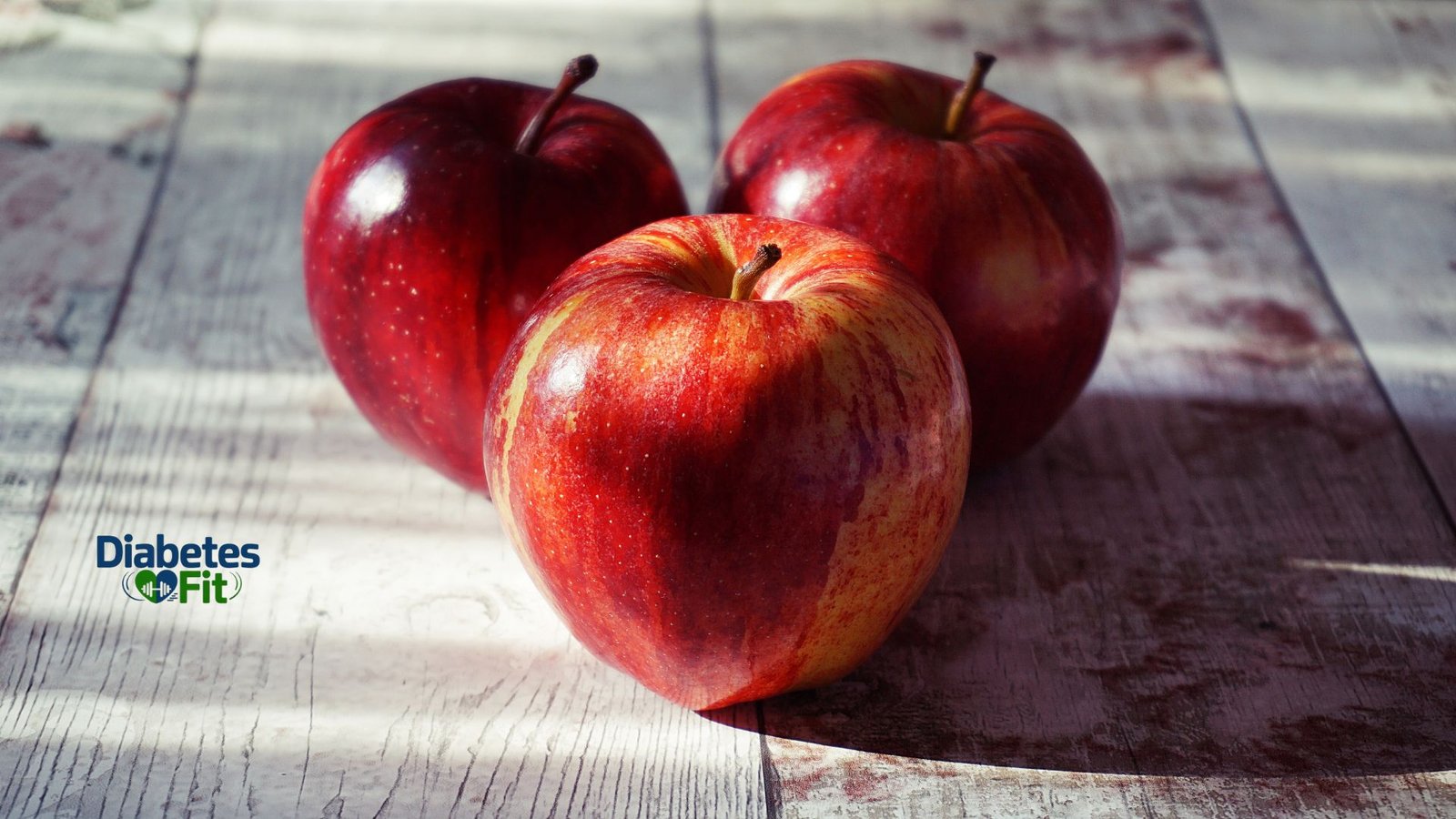
Apples can raise blood sugar — but they’re not the optimal choice for treating a hypoglycemic episode. Their fiber content, which makes them excellent for everyday blood sugar management, actually slows glucose absorption during a low blood sugar emergency when speed is everything. In some situations, an apple is a perfectly reasonable option. In others, it could leave you undertreated.
This guide gives you the complete, medically accurate picture: what apples do to blood sugar, when they’re helpful, when they’re not, how they compare to better options, and exactly how to use them correctly if an apple is what you have.
Also see Can Menopause Cause Low Blood Sugar? What Every Woman Over 40 Needs to Know.
Are Apples Good for Low Blood Sugar? The Science First
To understand where apples fit in treating low blood sugar, you need to understand what hypoglycemia demands from a treatment — and what apples chemically deliver.
What Hypoglycemia Needs
When blood sugar drops below 70 mg/dL (3.9 mmol/L), your brain and body are running low on their primary fuel. The treatment goal is singular: get glucose into the bloodstream as quickly as possible. Speed determines how fast symptoms resolve and how safe you stay.
The ideal hypoglycemia treatment:
- Contains fast-absorbing simple sugars (glucose and fructose)
- Has minimal fiber — fiber slows absorption, which is a problem during a low
- Provides approximately 15 grams of carbohydrates — the ADA-recommended dose for treating mild hypoglycemia
- Is predictable and precise in its carbohydrate content
- Raises blood sugar within 10–15 minutes
What Apples Actually Contain
| Component | Amount per Medium Apple (182g) | Effect on Hypoglycemia Treatment |
| Total carbohydrates | 25g | Good — enough carbs to raise blood sugar |
| Natural sugars | 19g (glucose + fructose + sucrose) | Partially helpful — raises blood sugar |
| Dietary fiber | 4.4g | Problematic — slows sugar absorption |
| Water content | ~86% | Neutral — dilutes sugar slightly |
| Glycemic Index | 36–38 (Low) | Problematic — low GI means slower blood sugar rise |
| Glycemic Load | 6 (Low) | Confirms slow, modest blood sugar impact |
Here’s the key insight: the fiber and low glycemic index that make apples excellent for everyday blood sugar management are exactly what makes them suboptimal for treating a hypoglycemic emergency.
When you need your blood sugar to rise in 10–15 minutes, the 4.4 grams of fiber in an apple slow the absorption of its natural sugars — meaning blood sugar rises more slowly and less dramatically than it would from pure glucose or juice.
When Apples Are and Are Not Appropriate for Low Blood Sugar
When Apples ARE Appropriate
For Mild, Non-Urgent Hypoglycemia
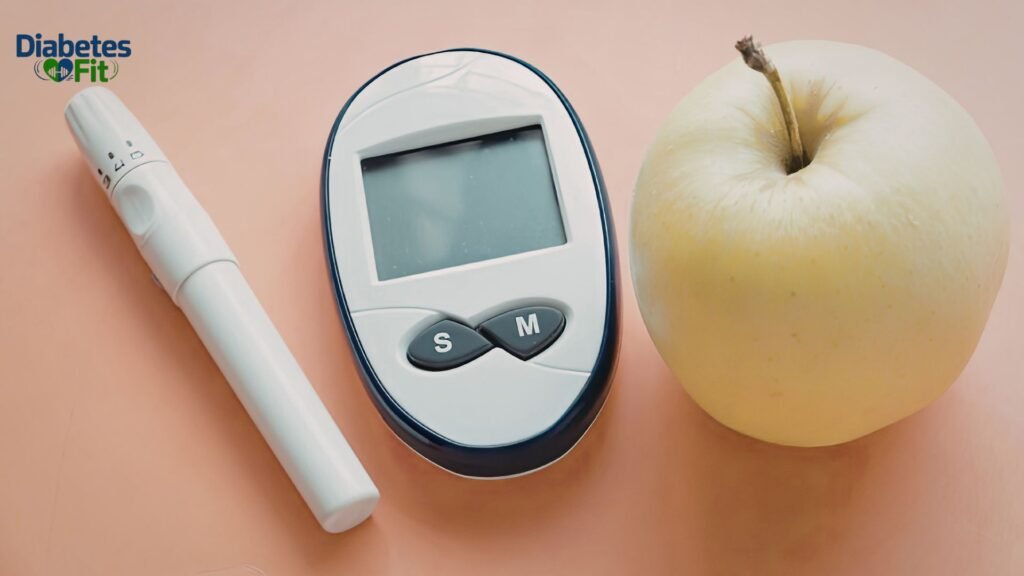
If your blood sugar is between 65–70 mg/dL with mild symptoms (slight dizziness, mild shakiness, mild hunger) — and not dropping rapidly — a whole apple can be a reasonable treatment. The 19 grams of natural sugar it contains will raise blood sugar, just more slowly than faster options.
In this scenario, the slight delay from fiber is manageable because the episode isn’t severe and the blood sugar isn’t in a dangerous free-fall.
When Faster Options Are Unavailable
Life happens. If you’re at a picnic, in a park, at school, or in a situation where an apple is the only available carbohydrate source — use it. A slower response is still a response, and an apple is infinitely better than nothing.
As a Follow-Up Stabilizing Snack After Initial Treatment
This is actually where apples genuinely shine in hypoglycemia management. Once you’ve treated the acute low blood sugar with a faster option (glucose tablets, juice), eating half an apple or a full apple 15–20 minutes later provides:
- Sustained glucose release from its slower-digesting fiber
- Nutritional value (vitamin C, potassium, antioxidants)
- A natural stabilizing effect that prevents blood sugar from dropping again after the initial fast-acting treatment wears off
An apple as a follow-up snack is excellent. An apple as first-line treatment is acceptable but not optimal.
When Apples Are NOT the Right Choice
For Moderate to Severe Hypoglycemia (Below 54 mg/dL)
When blood sugar is significantly low and symptoms include confusion, disorientation, significant shakiness, or difficulty thinking clearly — speed is critical. In this situation, the fiber-delayed absorption of an apple may leave you undertreated long enough for symptoms to worsen.
At this level, glucose tablets, glucose gel, or 4 oz of juice are strongly preferred — they raise blood sugar 5–10 minutes faster than an apple can.
When Blood Sugar Is Dropping Rapidly
If your continuous glucose monitor (CGM) shows a rapidly falling arrow (↓↓) alongside a borderline reading — the rate of change matters as much as the current number. An apple’s slow-releasing sugars may not keep pace with a rapid blood sugar fall. Choose faster-acting options in this scenario.
For Children With Severe Symptoms
Children metabolize blood sugar changes faster than adults and can deteriorate more quickly during a hypoglycemic episode. For children with significant symptoms, glucose tablets or juice are preferred over apples for the speed advantage.
How Apples Compare to Other Hypoglycemia Treatments
Here’s a direct, honest comparison of apples against common alternatives:
| Treatment | Carbs for 15g Dose | Speed (Time to Raise Blood Sugar) | Fiber Content | Portability |
| Glucose tablets (dextrose) | 3–4 tablets | 5–10 minutes | None | ⭐⭐⭐⭐⭐ |
| Orange juice | 4 oz (½ cup) | 10–15 minutes | Minimal | ⭐⭐⭐ |
| Apple juice | 4 oz | 10–15 minutes | None | ⭐⭐⭐ |
| Regular soda | 4–5 oz | 10–15 minutes | None | ⭐⭐⭐ |
| Honey | 1 tablespoon | 10–15 minutes | None | ⭐⭐ |
| Whole apple | ~¾ medium apple | 20–35 minutes | 4.4g | ⭐⭐⭐⭐ |
| Apple sauce (unsweetened) | ~4 oz | 15–20 minutes | Low | ⭐⭐⭐ |
| Apple juice concentrate | ~1–2 tbsp | 10–15 minutes | None | ⭐⭐ |
| Chocolate bar | Half bar | 30–45 minutes | Minimal | ⭐⭐⭐ |
| Regular food/meal | Full portion | 45–60 minutes | Varies | ⭐⭐⭐ |
The takeaway is clear: whole apples sit in the slower absorption tier — still effective, but not first-choice when speed matters.
Apple Juice vs. Whole Apple for Low Blood Sugar
This is an important distinction that many people miss. Apple juice and whole apples behave very differently during a hypoglycemic episode — even though they come from the same fruit.
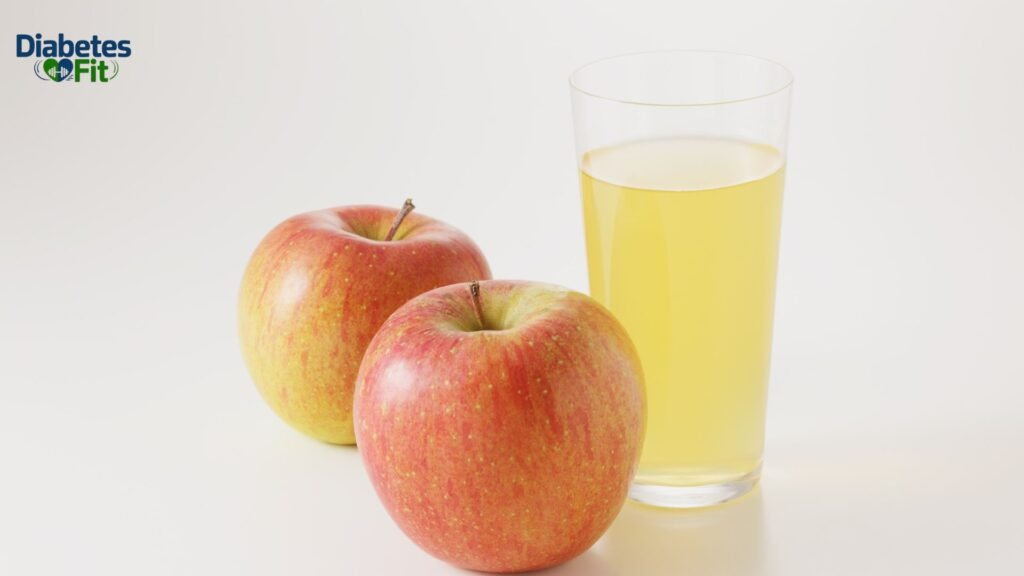
Apple Juice (4 oz = ~15g carbs)
Apple juice has had all fiber removed during processing. What remains is primarily fructose and glucose in liquid form — which absorbs rapidly through the small intestine.
- Speed: 10–15 minutes to raise blood sugar
- Precision: 4 oz = approximately 15g carbs (standard treatment dose)
- Fiber: None — so absorption is fast
- Best for: First-line treatment when glucose tablets aren’t available
Whole Apple (¾ medium apple ≈ 15g carbs)
A whole apple contains the same sugars as juice — but packaged with 4.4 grams of fiber that significantly slows their release into the bloodstream.
- Speed: 20–35 minutes to meaningfully raise blood sugar
- Precision: Less precise — apples vary in size and sugar content
- Fiber: 4.4g — substantially slows absorption
- Best for: Mild episodes or follow-up stabilization after initial treatment
Practical rule: If you have apple juice — use it for treating hypoglycemia. If you only have a whole apple — use it, but understand it will take longer to work and be patient during the 15-minute wait period.
Apple Varieties and Their Glycemic Differences
Not all apples are the same. While the differences aren’t dramatic enough to change treatment decisions, understanding variety-to-variety variation in sugar content is useful:
| Apple Variety | Average Sugar per Medium Apple | Glycemic Index | Notes |
| Fuji | ~18g | ~38 | Sweeter — slightly faster response |
| Gala | ~17g | ~38 | Sweet, common variety |
| Granny Smith | ~13g | ~34 | Tart — lower sugar, slowest response |
| Honeycrisp | ~19g | ~39 | Higher sugar — slightly better for hypo |
| Red Delicious | ~16g | ~36 | Average sugar content |
| Golden Delicious | ~17g | ~37 | Medium sweetness |
For treating low blood sugar specifically: Sweeter varieties (Fuji, Honeycrisp) are marginally better because they contain more natural sugar per apple and have a slightly higher glycemic index — meaning slightly faster absorption. Granny Smith apples, while excellent for everyday blood sugar management due to their low glycemic index and high fiber, are the least optimal choice for treating a hypoglycemic episode.
How to Use an Apple Correctly to Treat Low Blood Sugar
If a whole apple is your only available option for treating low blood sugar, here’s how to use it as effectively as possible:
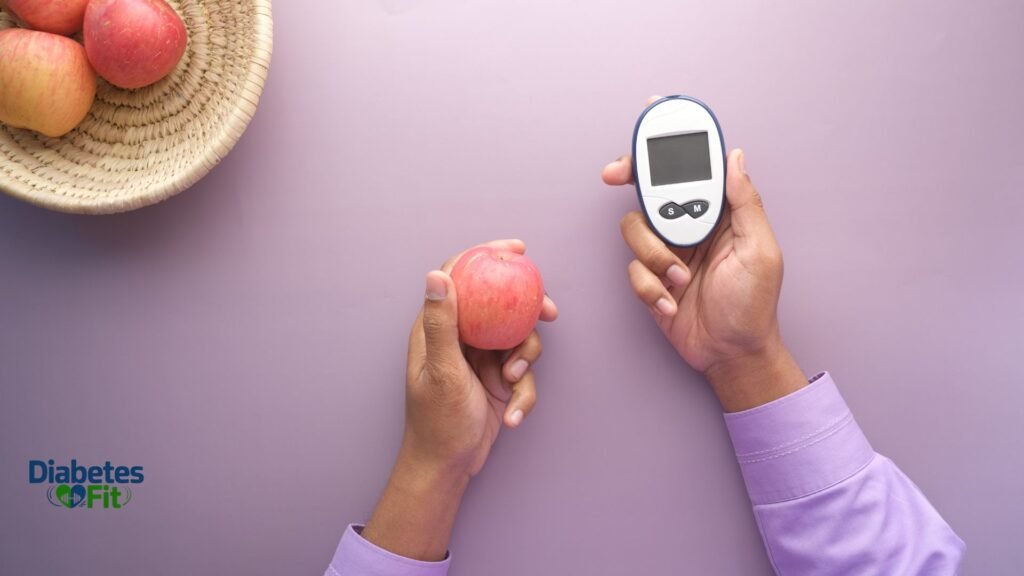
Step 1: Check Your Blood Sugar First
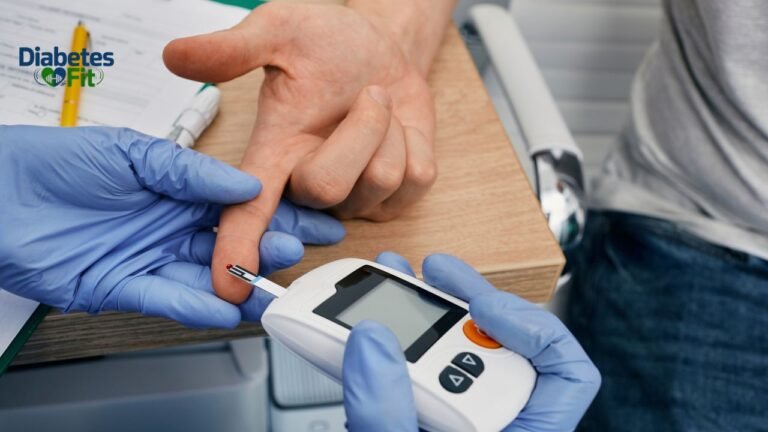
If possible, confirm your blood sugar is below 70 mg/dL before treating. If symptoms are clear and your meter isn’t immediately available — treat first, check as soon as possible.
Step 2: Eat Approximately ¾ of a Medium Apple
Three-quarters of a medium apple provides approximately 14–15 grams of carbohydrates — close to the standard 15-gram treatment dose. Eating a full apple delivers 25 grams, which can cause blood sugar to overshoot and swing too high.
For easier dosing, choose a small apple (~120–130g) and eat the whole thing — this provides approximately 15 grams of carbohydrates.
Step 3: Eat It Without Peanut Butter or Other Additions
During a hypoglycemic episode, avoid eating your apple with peanut butter, almond butter, or cheese — even though these are excellent pairings under normal circumstances. Fat and protein slow glucose absorption further. During a low blood sugar emergency, eat the apple plain to maximize absorption speed.
Step 4: Wait 20–25 Minutes (Longer Than Normal)
Because of the fiber content, an apple requires a longer wait time before rechecking blood sugar. Instead of the standard 15-minute wait of the 15-15 Rule, wait 20–25 minutes after eating the apple before rechecking.
Step 5: Recheck Blood Sugar
If blood sugar is now above 70 mg/dL and symptoms are improving — you’ve treated the episode successfully. Move to a small stabilizing snack containing protein and complex carbohydrates.
If blood sugar is still below 70 mg/dL after 25 minutes — treat again. This time, if possible, use a faster option: 4 oz of juice, glucose tablets, or honey.
Step 6: Eat a Stabilizing Follow-Up Snack
Once recovered, eat a small snack that combines protein and a small amount of complex carbohydrates to prevent blood sugar from dropping again:
- Greek yogurt with berries
- A small portion of nuts and a piece of fruit
- Peanut butter on a small whole grain cracker
- Hard-boiled egg and a small orange
Apples as a Blood Sugar Stabilizer: The Everyday Role They Excel At
While this guide has focused on the limitations of apples for treating acute hypoglycemia — it’s important to emphasize how exceptional apples are for preventing blood sugar drops and maintaining stable glucose throughout the day.
Pectin: Apple’s Secret Weapon for Blood Sugar Stability
Apples are rich in pectin — a soluble fiber that forms a gel in the digestive tract. This gel:
- Slows the digestion and absorption of all carbohydrates eaten at the same meal
- Feeds beneficial gut bacteria that produce short-chain fatty acids supporting insulin sensitivity
- Creates a sustained, gradual glucose release that prevents the blood sugar spikes and crashes that trigger reactive hypoglycemia
Research shows that eating an apple before a meal can reduce post-meal blood sugar elevation by 25–30% compared to the same meal without an apple.
Quercetin and Polyphenols
Apples contain quercetin and other polyphenols — plant compounds shown in research to:
- Inhibit alpha-glucosidase (an enzyme that breaks down carbohydrates) — slowing glucose absorption
- Improve insulin signaling in cells
- Reduce oxidative stress and inflammation that contribute to insulin resistance
These effects make apples one of the best everyday fruits for people with diabetes, prediabetes, or anyone managing blood sugar stability.
The Low Glycemic Index Advantage
With a glycemic index of 36–38, apples cause one of the slowest and most gradual blood sugar rises of any fruit. This makes them excellent for:
- Preventing reactive hypoglycemia (post-meal blood sugar crashes)
- Maintaining stable energy between meals
- Satisfying sweet cravings without spiking insulin
The Best Time to Eat Apples for Blood Sugar Benefits
| Timing | Blood Sugar Benefit | Recommended |
| Before a meal | Reduces post-meal glucose spike by 25–30% | ✅ Excellent |
| As a mid-morning snack (with protein) | Stabilizes blood sugar between breakfast and lunch | ✅ Excellent |
| As an afternoon snack | Prevents 3 PM blood sugar dip and snack cravings | ✅ Excellent |
| After treating hypoglycemia | Provides sustained glucose to prevent secondary drop | ✅ Excellent |
| During acute hypoglycemia (as first treatment) | Acceptable if nothing faster available | ⚠️ Acceptable |
| During severe hypoglycemia (below 54 mg/dL) | Too slow — use glucose tablets or juice | ❌ Not recommended |
Frequently Asked Questions
Can I use apples to treat low blood sugar?
Yes — a whole apple can treat mild low blood sugar (blood glucose 65–70 mg/dL with mild symptoms), but it works more slowly than glucose tablets, juice, or regular soda due to its fiber content. Eat approximately ¾ of a medium apple (or a whole small apple) without any fat or protein additions, and wait 20–25 minutes before rechecking rather than the standard 15 minutes. For moderate to severe episodes, choose faster-acting treatments and save the apple for follow-up stabilization.
How many grams of carbs does an apple have for treating hypoglycemia?
A medium apple (182g) contains approximately 25 grams of total carbohydrates and 19 grams of natural sugar. However, because 4.4 grams of fiber slow absorption, the effective glycemic impact is more like 12–15 grams of readily absorbable glucose-equivalent — meaning for hypoglycemia treatment, eating ¾ of a medium apple or one small apple (~130g) most closely delivers the medically recommended 15-gram carbohydrate dose.
Is apple juice better than a whole apple for low blood sugar?
Yes — for treating an acute hypoglycemic episode, 4 oz (½ cup) of apple juice is significantly better than a whole apple. Apple juice has had all fiber removed, so its sugars absorb in 10–15 minutes rather than the 20–35 minutes for a whole apple. Apple juice also allows more precise dosing: 4 oz = approximately 15 grams of carbohydrates. If you have both available during a low blood sugar episode, reach for the juice first and eat the apple afterward as a stabilizing follow-up snack.
Are apples good for diabetics with low blood sugar?
Apples can be used for treating mild hypoglycemia in people with diabetes, but they’re not the first-choice treatment. Glucose tablets or juice are faster and more precise. Where apples genuinely excel for people with diabetes is in preventing low blood sugar — their pectin fiber, low glycemic index, and polyphenol content help stabilize blood sugar throughout the day, reduce post-meal spikes, and improve insulin sensitivity. Eating an apple as a mid-morning or afternoon snack (paired with protein) can help maintain glucose stability and reduce the frequency of hypoglycemic episodes.
Which is better for low blood sugar — apple or banana?
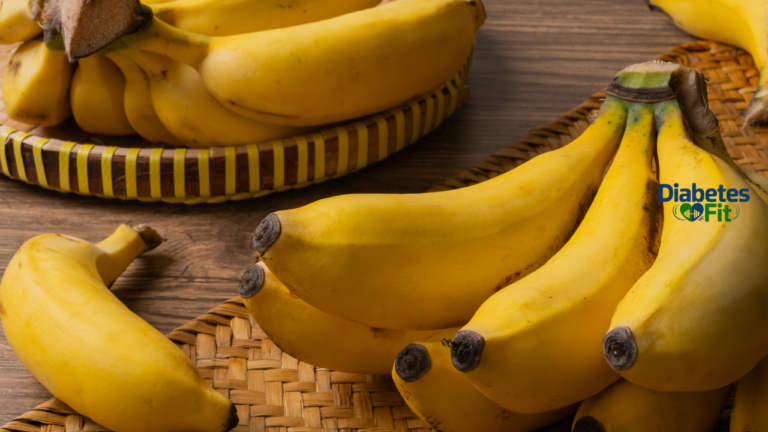
For treating acute hypoglycemia, a banana is marginally better than a whole apple because it has a slightly higher glycemic index (51 vs. 36–38), somewhat less fiber, and more total sugar per serving — meaning blood sugar rises a little faster. A ripe banana provides approximately 27 grams of carbohydrates per medium banana. However, a less ripe (greener) banana has more resistant starch and absorbs more slowly — more like an apple. For everyday blood sugar stability, apples are superior to bananas due to their lower sugar content and higher pectin fiber.
Can eating apples daily help prevent hypoglycemia?
Yes — eating apples regularly as part of a balanced diet can help reduce the frequency of reactive hypoglycemia and blood sugar instability. Apple pectin fiber slows carbohydrate digestion, preventing the rapid blood sugar spikes and subsequent crashes that trigger hypoglycemia after meals. Quercetin and other apple polyphenols improve insulin sensitivity over time. Eating an apple mid-morning or mid-afternoon as a snack (particularly with protein like a tablespoon of almond butter) maintains blood sugar in a stable range and reduces between-meal glucose dips.
What should I eat after treating low blood sugar with an apple?
After your blood sugar returns above 70 mg/dL following apple treatment, eat a small stabilizing snack containing both protein and complex carbohydrates to prevent a secondary blood sugar drop as the apple’s sugars wear off. Good options: Greek yogurt with berries, peanut butter on a small whole grain cracker, a hard-boiled egg with a small orange, or a small portion of cottage cheese with a few whole grain crackers. This combination provides a sustained glucose release that keeps blood sugar stable until your next main meal.
Conclusion
Here’s the honest, complete answer: apples are good for low blood sugar — but not great for treating it acutely, and excellent for preventing it daily.
When it comes to treating an active hypoglycemic episode, apples work but they work slowly. Their 4.4 grams of fiber and low glycemic index — the very qualities that make them nutritionally exceptional in everyday life — slow the absorption of their natural sugars enough to make them a second-tier choice when speed is critical. For mild episodes with plenty of time to respond, a whole apple is acceptable. For moderate episodes where blood sugar is dropping fast, reach for glucose tablets or juice and use the apple afterward.
Where apples are genuinely excellent for low blood sugar prevention: their pectin fiber stabilizes blood sugar throughout the day, reduces post-meal spikes, feeds gut bacteria that improve insulin sensitivity, and delivers polyphenols that support long-term glucose regulation. An apple a day — particularly timed before meals or as a mid-afternoon snack paired with protein — is a legitimate, research-supported strategy for reducing the frequency of hypoglycemic episodes in people who experience them regularly.
Know the difference between using an apple to treat hypoglycemia and using it to prevent hypoglycemia. Both have value — but only one is the right tool in an emergency.
This article is for informational purposes only and does not replace personalized medical advice. Always consult your doctor or diabetes care team for a hypoglycemia management plan tailored to your specific condition, medications, and health history.
The American Diabetes Association (ADA) provides comprehensive, up-to-date clinical guidance on hypoglycemia treatment — including the 15-15 Rule, recommended fast-acting carbohydrate sources, and when to seek emergency care.

David Miller: I am a health and wellness writer focused on diabetes awareness, blood sugar control, and healthy living. I creates clear, practical content to help readers make better everyday health choices. I write evidence-based articles about diabetes, diet, and healthy living. My goal is to simplify complex health topics using trusted sources like WHO and medical journals.