How to Lower Your A1C: Simple Steps That Actually Work
If you’ve recently been told your A1C is too high, you’re not alone — and you’re not out of options. Millions of people are in the same boat, wondering how to lower your A1C without completely turning your life upside down. The good news? Small, steady changes really do make a difference. Your A1C is a 3-month average of your blood sugar levels. When it’s high, it means your blood sugar has been running too high for too long. That puts you at risk for serious complications like nerve damage, kidney disease, and heart problems. But here’s the thing: your A1C is not permanent. With the right habits, the right foods, and a little consistency, you can bring those numbers down — sometimes faster than you think.
To better understand your numbers, take a look at our detailed Blood Sugar Level Chart that explains normal and high blood sugar ranges.
What Is A1C and Why Does It Matter?
Your A1C test (also called HbA1c) tells your doctor how well your blood sugar has been controlled over the past two to three months. Unlike a daily finger-stick test, which only shows your blood sugar at that one moment, the A1C gives a bigger picture.
Think of it this way: a finger-stick test is like a snapshot, while A1C is more like a short film of your blood sugar over time.
What Do A1C Numbers Mean?
Here’s a simple breakdown:
| A1C Level | What It Means | Action Needed |
| Below 5.7% | Normal | Keep up the good work |
| 5.7% – 6.4% | Prediabetes | Make lifestyle changes now |
| 6.5% or higher | Diabetes | Medical care + lifestyle changes |
| 7% or higher (for diagnosed patients) | Poorly controlled | Urgent changes needed |
Most doctors want people with diabetes to aim for an A1C below 7%. If yours is higher, it’s time to take action.
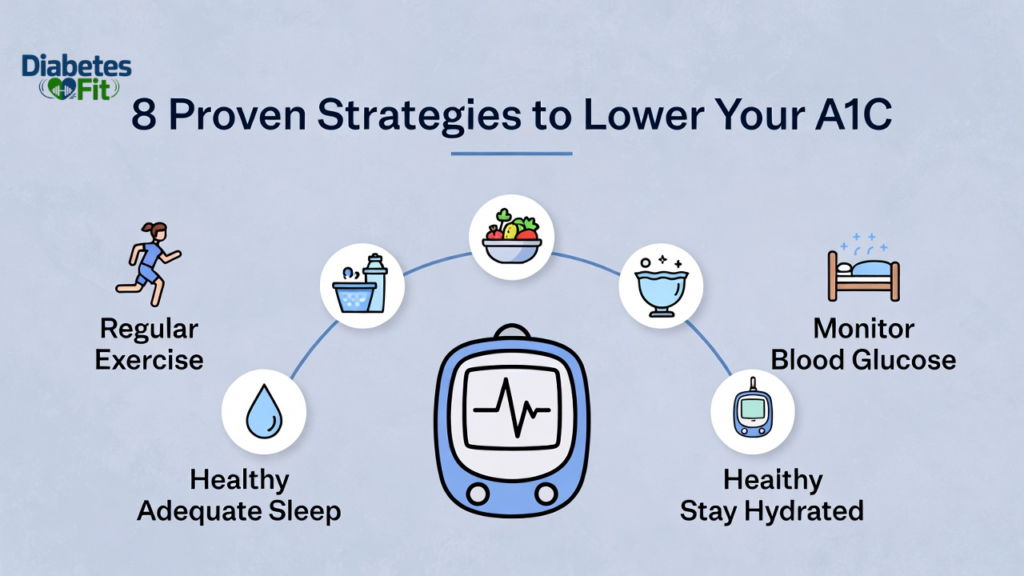
How to Lower Your A1C: 8 Proven Strategies
There’s no single magic trick here. Lowering your A1C takes a combination of changes — but none of them have to be extreme. Here are the most effective things you can do, backed by real evidence.
1. Clean Up Your Carb Choices
Carbohydrates have the biggest impact on your blood sugar. But that doesn’t mean you have to go zero-carb. It means being smarter about the carbs you eat.
- Choose whole grains over white bread, white rice, and pasta
- Eat more non-starchy vegetables like broccoli, spinach, and zucchini
- Cut back on sugary drinks — sodas, fruit juices, and sweet teas are major blood sugar spikes waiting to happen
- Watch your portion sizes, especially for rice, bread, and potatoes
Real-life example: Maria, a 52-year-old teacher, swapped her daily white rice lunch for cauliflower rice mixed with brown rice. In three months, her A1C dropped from 8.1% to 7.3%. Small swap, big result.
2. Move Your Body More — Even a Little Helps
Exercise is one of the most powerful tools for learning how to lower your A1C. When your muscles work, they absorb sugar from your blood without needing insulin. That directly lowers your blood sugar levels.
- Aim for at least 30 minutes of moderate exercise five days a week
- Walking after meals is especially effective — even a 10-minute walk helps
- Strength training (lifting weights, resistance bands) is surprisingly good for blood sugar
- You don’t need a gym — dancing, gardening, and climbing stairs all count
Studies show that regular exercise can lower A1C by 0.5% to 1.5% on its own. That’s significant.
3. Lose Even a Small Amount of Weight
You don’t need to lose 50 pounds to see results. Research shows that losing just 5% to 10% of your body weight can meaningfully lower your A1C.
For a 200-pound person, that’s just 10 to 20 pounds. Losing weight reduces the amount of fat stored around your organs, which makes insulin work better.
4. Eat on a Consistent Schedule
Skipping meals or eating at random times can cause wild swings in blood sugar. Your body likes routine.
- Eat three balanced meals a day at regular times
- Avoid skipping breakfast — it often leads to overeating later
- If you snack, choose protein-rich or low-carb options like nuts, cheese, or boiled eggs
- Don’t eat large meals late at night — blood sugar is harder to control after dark
5. Take Your Medications as Prescribed
This one sounds obvious, but it’s one of the most commonly missed steps. Many people skip doses, cut pills in half to save money, or stop taking medication when they feel fine.
If you’ve been prescribed metformin, insulin, or other diabetes medications, taking them consistently is one of the most direct ways to lower your A1C. Talk to your doctor if cost or side effects are getting in the way — there are almost always alternatives.
6. Manage Stress (Yes, It Affects Blood Sugar)
When you’re stressed, your body releases hormones like cortisol and adrenaline. These hormones raise blood sugar. Chronic stress can push your A1C up over time without you even realizing it.
- Try deep breathing or a 5-minute meditation before bed
- Take breaks during work — even short ones help
- Talk to someone if you’re feeling overwhelmed — a counselor, friend, or support group
- Good sleep (7–9 hours) is also key — poor sleep raises blood sugar
7. Test Your Blood Sugar Regularly
If you’re trying to lower your A1C, testing your blood sugar regularly gives you real-time feedback. You can see which foods spike your levels and which don’t.
Many people are surprised to find that a “healthy” banana spiked their blood sugar more than expected, while eggs and avocado had almost no effect. Personal testing helps you make smarter choices.
- Test before and after meals to see the impact of different foods
- Keep a simple log or use a smartphone app to track trends
- Share your results with your doctor so they can adjust your plan
8. Drink More Water
Dehydration concentrates the sugar in your blood and can push your A1C up. Drinking enough water throughout the day helps your kidneys flush out excess sugar through urine.
- Aim for 8 cups (about 2 liters) of water a day
- Herbal teas and sparkling water (without sugar) count
- Avoid sugary drinks and be careful with fruit juices — even 100% juice raises blood sugar quickly
Foods That Help Lower A1C
What you eat is the foundation of blood sugar control. These are foods that research consistently shows help keep A1C in check:

| Food | Why It Helps |
| Leafy greens (spinach, kale) | Low in carbs, high in magnesium which improves insulin sensitivity |
| Oily fish (salmon, sardines) | Omega-3 fatty acids reduce inflammation and support heart health |
| Eggs | High protein, minimal effect on blood sugar |
| Avocado | Healthy fats slow carb absorption, reducing blood sugar spikes |
| Nuts and seeds | Low glycemic, high fiber, reduce post-meal blood sugar rise |
| Berries (blueberries, strawberries) | Lower sugar than most fruits, high in antioxidants |
| Apple cider vinegar | Studies show it can lower fasting blood sugar by improving insulin sensitivity |
| Cinnamon | Small amounts may modestly improve blood sugar control |
| Legumes (lentils, chickpeas) | High fiber slows glucose absorption into the bloodstream |
Foods to Limit or Avoid
Just as important as knowing what to eat is knowing what to cut back on:
- White bread, white rice, and regular pasta — rapidly digested, spike blood sugar fast
- Sugary drinks — sodas, energy drinks, sweet tea, and even 100% fruit juice
- Candy, pastries, and desserts — obvious sugar bombs
- Processed snack foods like chips and crackers — often have hidden sugars and refined carbs
- Alcohol — can cause unpredictable blood sugar swings, especially on an empty stomach
- Large amounts of tropical fruits like mango, pineapple, and watermelon
How Long Does It Take to Lower A1C?
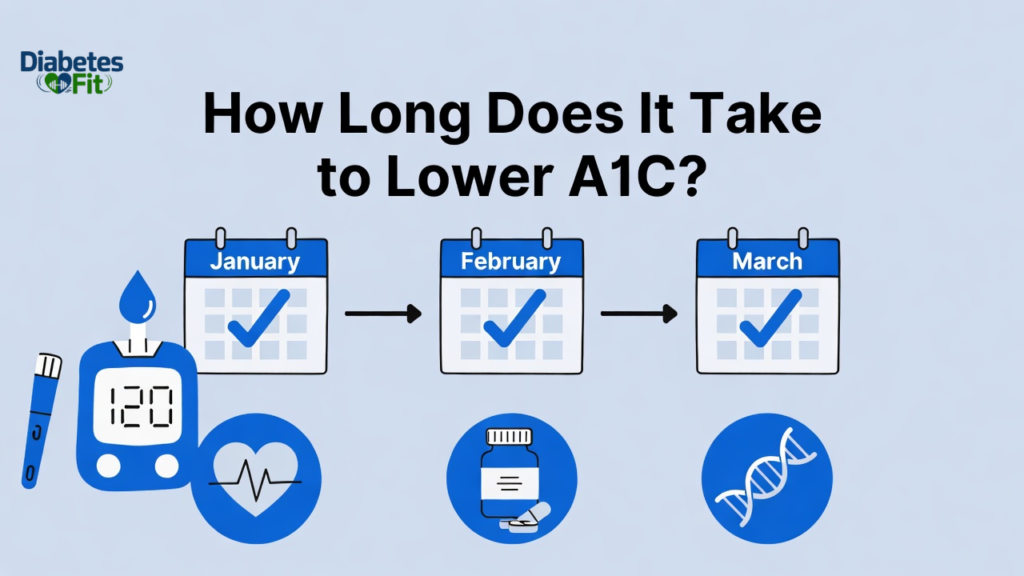
A1C reflects your average blood sugar over about 3 months. So even if you make big changes today, you won’t see the full effect on your A1C test for about 3 months.
But don’t let that discourage you. Your blood sugar starts improving within days of making changes. You just have to wait for the A1C lab result to catch up.
Here’s what realistic progress can look like:
| Timeframe | What You Might See |
| 1–2 weeks | Daily blood sugar readings starting to improve |
| 1 month | Noticeable reduction in blood sugar spikes after meals |
| 3 months | First A1C test showing real improvement |
| 6 months | Significant A1C reduction with consistent effort |
| 12 months+ | Potentially reaching target A1C with sustained changes |
People who make strong lifestyle changes alongside medication often see their A1C drop by 1% to 3% within 6 months. Some people with prediabetes can even bring their A1C back to normal range.
A Simple 7-Day Starter Plan
Not sure where to begin? Here’s a simple plan to get you started on how to lower your A1C this week:
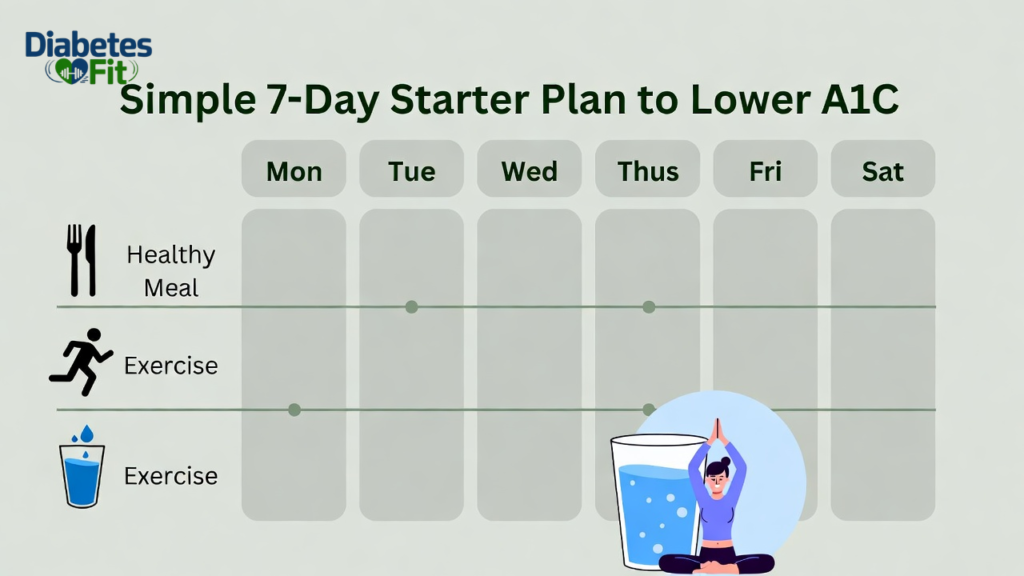
- Day 1: Swap one sugary drink for water or herbal tea
- Day 2: Go for a 15-minute walk after dinner
- Day 3: Eat a veggie-heavy lunch — fill half your plate with non-starchy vegetables
- Day 4: Check your medications — did you take all doses this week?
- Day 5: Go to bed 30 minutes earlier and aim for 7–8 hours of sleep
- Day 6: Try a 10-minute stress relief activity — walk, stretch, or breathe deeply
- Day 7: Review your week — what felt manageable? Build on that next week
You don’t need to do everything at once. Picking two or three changes and doing them consistently will get you further than trying everything and burning out in a week.
Frequently Asked Questions (FAQs)
Here are some of the most common questions people have about how to lower your A1C:
Q: How fast can A1C be lowered?
A: A1C can start showing improvement within 3 months of making consistent changes. Some people see drops of 0.5% to 1% in their first test after lifestyle changes. More significant drops of 2% to 3% are possible over 6 months with strong effort and medication support.
Q: Can A1C be lowered without medication?
A: Yes, especially for people with prediabetes or newly diagnosed type 2 diabetes. Diet changes, exercise, weight loss, and stress management can lower A1C without medication. However, if your A1C is very high (above 9–10%), medication is usually needed alongside lifestyle changes.
Q: What is the best diet to lower A1C?
A: There’s no one-size-fits-all answer, but low-glycemic diets, Mediterranean-style eating, and low-carb diets have all shown strong results. The key is reducing refined carbs and sugar while eating more fiber, protein, and healthy fats.
Q: Does drinking water lower A1C?
A: Staying hydrated helps your kidneys remove excess sugar from the blood. While water alone won’t dramatically lower your A1C, chronic dehydration can raise blood sugar. Replacing sugary drinks with water is one of the easiest and most effective changes you can make.
Q: Can stress raise A1C?
A: Yes. Chronic stress triggers the release of cortisol, a hormone that raises blood sugar. This can push your A1C higher over time. Managing stress through sleep, exercise, and relaxation techniques is an important — but often overlooked — part of blood sugar control.
Q: Is walking enough exercise to lower A1C?
A: Walking is one of the most effective and accessible exercises for blood sugar control. Research shows that walking for 30 minutes a day, especially after meals, can significantly reduce A1C. You don’t need intense workouts — consistent moderate movement is what matters.
Q: How often should I check my A1C?
A: Most doctors recommend checking A1C every 3 months if your blood sugar isn’t well controlled, and every 6 months once you’ve reached your target. Ask your doctor what schedule is right for your situation.
Conclusion
Learning how to lower your A1C can feel overwhelming at first, but the truth is: most people see real results when they make even a few consistent changes. You don’t need to be perfect. You just need to be persistent.
Start with one or two things this week — maybe cutting back on sugary drinks and adding a daily walk. Once those feel normal, add something else. Progress adds up faster than you think.
Remember, your A1C is not a life sentence. It’s a number that reflects your habits over the past few months. And habits can change.
If you’re serious about getting your A1C under control, talk to your doctor or a registered dietitian. They can help you build a personalized plan that works for your life, your schedule, and your health goals.
You have more power over your health than you may realize. Start today — even small steps in the right direction count.
Medical Disclaimer: This article is for informational purposes only and does not constitute medical advice. Always consult your healthcare provider before making changes to your diet, medications, or exercise routine.
For more practical tips on improving your A1C levels, you can also read this helpful guide on Dignity Health.

David Miller is a health and wellness writer focused on diabetes awareness, blood sugar control, and healthy living. He creates clear, practical content to help readers make better everyday health choices.