Is Sweet Potato Good for Diabetes? 7 Surprising Facts Every Diabetic Must Know
If you have diabetes, you’ve probably been told to stay away from potatoes. But then someone mentions sweet potatoes are different — and suddenly you’re confused. Is sweet potato good for diabetes, or is it just another starchy food that will spike your blood sugar? This is one of the most common questions people with diabetes ask their doctors and dietitians — and honestly, the answer is better than most people expect. Sweet potatoes are not the enemy.
In fact, when eaten the right way, they can be one of the most nutritious, satisfying, and blood-sugar-friendly foods in a diabetic meal plan. This article gives you the complete, science-backed picture — nutrition facts, glycemic index data, cooking tips, portion guidance, and real-world advice you can use starting today.
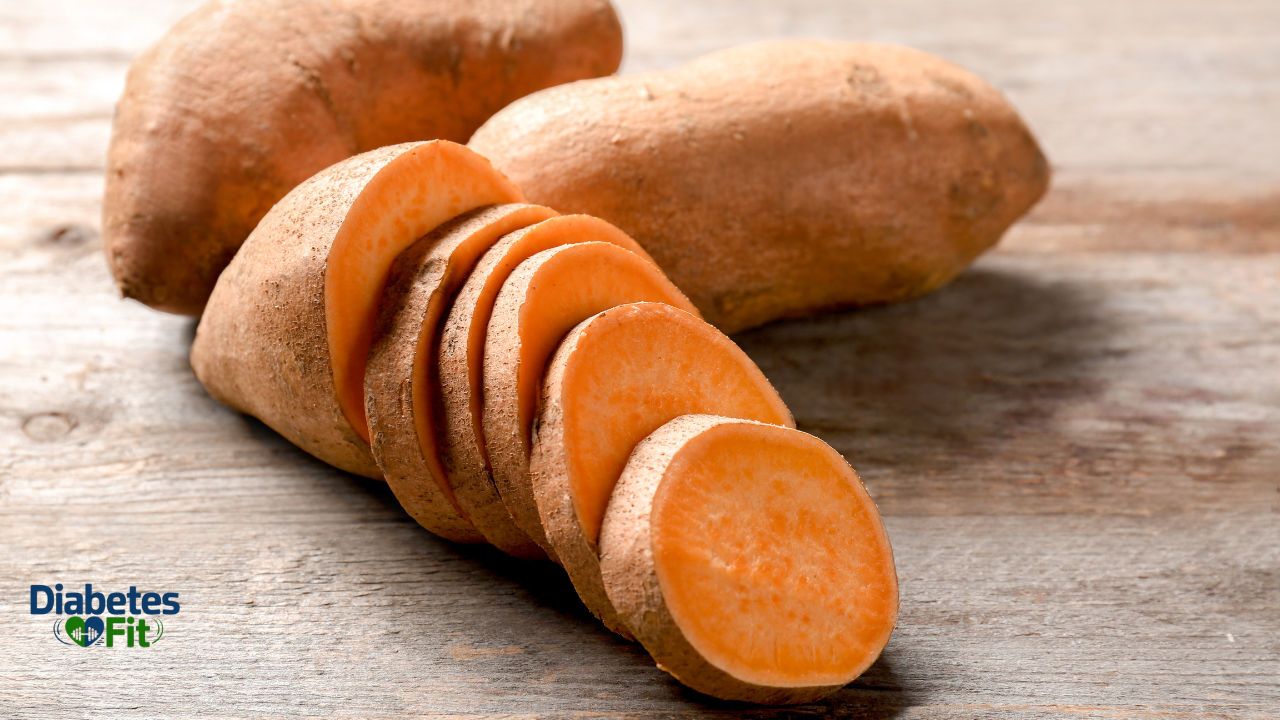
Sweet potatoes have a lower glycemic index than many regular potatoes, making them a better choice for blood sugar control. You may also be interested in learning Are Bananas Good for Diabetics?
Is Sweet Potato Good for Diabetes? Let’s Start With the Nutrition
Before anything else, let’s look at what a sweet potato actually contains. Because the nutrition profile tells a story that surprises most people who assume it’s just “another potato.”
Here’s what one medium sweet potato (approximately 130g, baked with skin) provides:
| Nutrient | Amount | % Daily Value |
| Calories | 112 | — |
| Total Carbohydrates | 26g | 9% |
| Dietary Fiber | 3.8g | 14% |
| Natural Sugars | 5.4g | — |
| Protein | 2.1g | 4% |
| Fat | 0.1g | 0% |
| Vitamin A (Beta-Carotene) | 961mcg | 107% |
| Vitamin C | 19.6mg | 22% |
| Potassium | 541mg | 12% |
| Manganese | 0.3mg | 13% |
| Magnesium | 31mg | 7% |
| Vitamin B6 | 0.3mg | 18% |
The numbers tell an impressive story. Sweet potatoes are rich in fiber, low in fat, packed with vitamins, and contain a meaningful amount of potassium and magnesium — two minerals that play a direct role in blood sugar regulation and insulin function. That combination makes sweet potato genuinely good for diabetes management when handled properly.
The Glycemic Index: Why Sweet Potato Beats Regular Potato for Diabetics
One of the most important concepts for any diabetic choosing foods is the glycemic index (GI) — a scale from 0 to 100 that measures how quickly a food raises blood sugar compared to pure glucose.
Here’s where sweet potato stands compared to regular potato and other common carbohydrate foods:
| Food | Glycemic Index | Glycemic Load (per serving) | Diabetic Rating |
| White potato (baked) | 85 | High | Poor choice |
| White potato (boiled) | 78 | High | Poor choice |
| White rice | 72 | High | Use caution |
| Sweet potato (baked) | 63 | Medium | Moderate — portion matters |
| Sweet potato (boiled) | 44 | Low-Medium | Good choice |
| Sweet potato (steamed) | 46 | Low-Medium | Good choice |
| Brown rice | 50 | Medium | Good choice |
| Lentils | 32 | Low | Excellent choice |
| Chickpeas | 28 | Low | Excellent choice |
Two things stand out immediately. First, sweet potato has a significantly lower glycemic index than regular white potato — especially when boiled or steamed rather than baked. Second, the cooking method dramatically affects the GI. A boiled sweet potato (GI ~44) is a very different food metabolically than a baked sweet potato (GI ~63).
This is one of the most important practical facts about whether sweet potatoes are good for diabetes — and it’s something most people overlook.
Why Cooking Method Changes Everything for Diabetic Sweet Potato Eating
This deserves its own section because it genuinely matters.
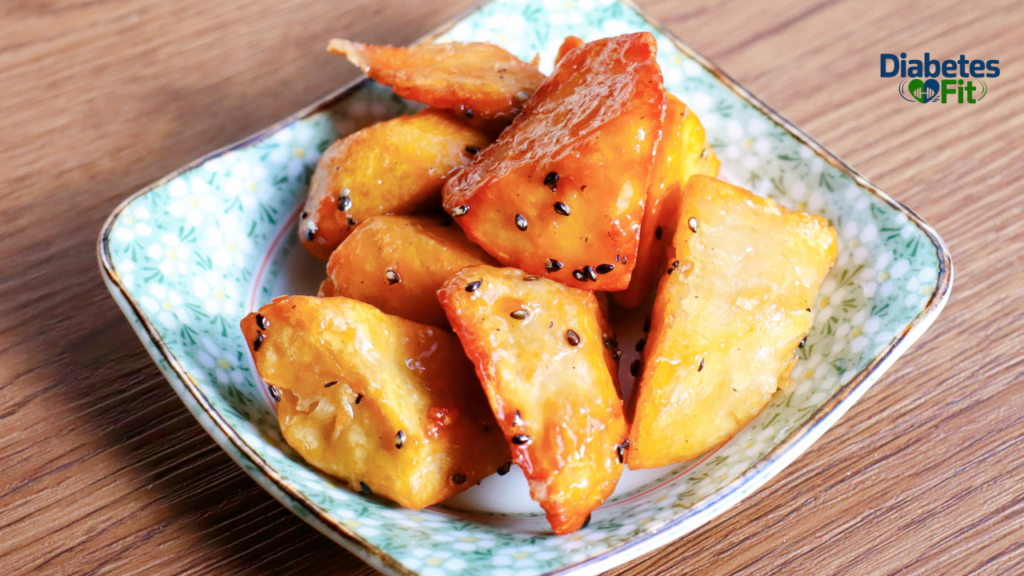
When you bake or roast a sweet potato at high heat, the starches gelatinize and break down more fully, making them faster to digest. The result is a higher blood sugar spike. When you boil or steam a sweet potato, the starch structure remains more intact and digests more slowly — meaning a gentler, more gradual glucose rise.
Here’s a practical comparison:
| Cooking Method | Approximate GI | Blood Sugar Impact | Best for Diabetics? |
| Boiled (with skin) | ~44 | Low-moderate rise | Yes — best method |
| Steamed | ~46 | Low-moderate rise | Yes — excellent |
| Microwaved | ~52 | Moderate rise | Yes — with portion control |
| Baked (oven) | ~63 | Moderate rise | Yes — smaller portions |
| Roasted (high heat, cubed) | ~65–70 | Moderate-high rise | Caution — smaller portions |
| Fried (sweet potato fries) | ~75+ | High rise | Avoid |
| Sweet potato chips (packaged) | ~80+ | High rise | Avoid |
The single most impactful thing a diabetic can do when eating sweet potatoes is to boil or steam them instead of baking or roasting them. Same vegetable. Dramatically different blood sugar outcome.
There’s also a bonus trick: cooking and then cooling sweet potato in the fridge overnight increases its resistant starch content — the same principle that works with rice. Resistant starch behaves like fiber in your body, passes through without being fully digested, and causes an even lower blood sugar response. You can reheat the sweet potato the next day, and the resistant starch largely stays intact.
Is Sweet Potato Good for Diabetes? 7 Genuine Health Benefits
So, beyond the glycemic index, why is sweet potato actually good for diabetes? Here are the evidence-backed benefits:
1. Fiber Slows Glucose Absorption
A medium sweet potato contains nearly 4 grams of dietary fiber. Fiber slows the rate at which glucose enters your bloodstream, creating a smoother, more gradual blood sugar rise rather than a sharp spike. It also keeps you feeling full longer, which helps prevent overeating and unhealthy snacking.
2. Beta-Carotene Is a Powerful Antioxidant
Sweet potatoes are one of the richest sources of beta-carotene — the compound that gives them their orange color and converts to vitamin A in the body. Beta-carotene is a potent antioxidant that helps combat the oxidative stress that diabetes causes throughout the body. Chronic oxidative stress is linked to many diabetic complications, including nerve damage, kidney disease, and cardiovascular disease.
3. Potassium Supports Blood Pressure Control
People with diabetes have a significantly higher risk of hypertension (high blood pressure). Potassium directly helps regulate blood pressure by counteracting the effects of sodium and relaxing blood vessel walls. One medium sweet potato provides about 12% of your daily potassium needs — making it a genuinely heart-protective food for diabetics.
4. Magnesium Improves Insulin Sensitivity
Research consistently shows that people with Type 2 diabetes tend to have lower magnesium levels than people without diabetes. Magnesium plays a direct role in insulin receptor function and glucose metabolism. Getting adequate magnesium from foods like sweet potatoes supports better insulin sensitivity over time.
5. Adiponectin — The Diabetes-Fighting Compound
This is one of the most exciting and lesser-known facts. Sweet potatoes contain a protein called adiponectin, a hormone produced by fat cells that helps regulate blood sugar metabolism. Research has found that people with Type 2 diabetes typically have lower adiponectin levels. Compounds in sweet potato have been shown in studies to stimulate adiponectin production, potentially improving insulin sensitivity directly.
6. Vitamin B6 Supports Nerve Health
Diabetic neuropathy — nerve damage from long-term elevated blood sugar — affects millions of people with diabetes. Vitamin B6 is essential for healthy nerve function and the production of neurotransmitters. Sweet potato is a meaningful source of B6, supporting the nervous system that diabetes puts at risk.
7. Natural Sweetness Reduces Sugar Cravings
People with diabetes often struggle with sugar cravings — understandably so. Sweet potato provides natural sweetness that satisfies the craving for something sweet without refined sugar, artificial sweeteners, or high-glycemic processed foods. This psychological benefit is real and practical.
How Much Sweet Potato Can a Diabetic Eat? Portion Control Guide
Is sweet potato good for diabetes in any amount? No — portion size matters significantly. Even healthy, low-GI foods can raise blood sugar when eaten in large quantities.
Here are practical portion guidelines:
| Portion Size | Approximate Carbs | Blood Sugar Impact | Best For |
| ¼ medium sweet potato (~65g boiled) | ~13g carbs | Very low impact | Strict blood sugar control |
| ½ medium sweet potato (~65–80g) | ~13–15g carbs | Low impact | Most diabetics — ideal portion |
| 1 medium sweet potato (~130g boiled) | ~26g carbs | Moderate impact | Active diabetics with good control |
| 1 large sweet potato (~180g+) | ~35g+ carbs | Higher impact | Too much for most diabetics at once |
The general recommendation for most diabetics: half a medium boiled sweet potato per meal — paired with protein and non-starchy vegetables to further reduce the glycemic impact.
Real-life example: Sandra, a 49-year-old with Type 2 diabetes, was told by a well-meaning friend that sweet potato was “completely fine” for diabetics. She started eating a large baked sweet potato for lunch every day. Her post-meal blood sugar readings went up noticeably. After speaking with her dietitian, she switched to half a boiled sweet potato paired with grilled salmon and spinach. Her readings improved significantly, and she finally understood it wasn’t just about what she ate — it was about how much and how it was prepared.
The Best Way to Eat Sweet Potato for Diabetes: Practical Combinations
Is sweet potato good for diabetes when eaten alongside the right foods? Absolutely — and smart pairing can reduce the blood sugar impact even further.
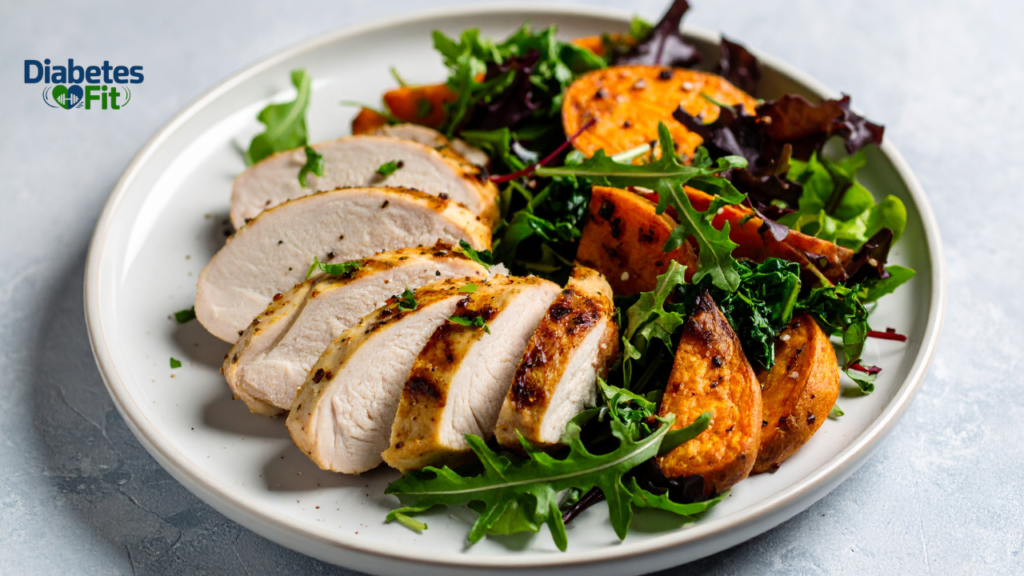
Best Food Pairings With Sweet Potato for Diabetics:
- Sweet potato + grilled chicken or fish — lean protein slows digestion and blunts the glucose spike
- Sweet potato + leafy greens (spinach, kale, broccoli) — non-starchy vegetables add fiber and nutrients with minimal carbs
- Sweet potato + avocado — healthy fat further slows carbohydrate absorption
- Sweet potato + lentils — combining two fiber-rich foods creates excellent blood sugar stability
- Sweet potato + eggs — protein and fat from eggs buffer the sweet potato’s carbohydrates well
- Sweet potato + olive oil drizzle — a small amount of healthy fat improves nutrient absorption and slows digestion
Foods to Avoid Combining With Sweet Potato:
- White rice or bread alongside sweet potato — too many fast-digesting carbs at once
- Sweet potato in desserts with added sugar or honey
- Sweet potato casserole with marshmallows or brown sugar (common at holiday meals)
- Sweet potato with heavily processed sauces containing hidden sugars
- Sweet potato fries paired with sugary dipping sauces
Sweet Potato vs. Regular Potato: Which Is Better for Diabetes?
People ask this comparison question constantly. Here’s the honest side-by-side:
| Factor | Sweet Potato | White Potato |
| Glycemic Index (boiled) | ~44 | ~78 |
| Fiber per medium | 3.8g | 2.3g |
| Vitamin A | Very high (107% DV) | Very low |
| Natural sugars | 5.4g | 1.2g |
| Resistant starch potential | Good | Good (especially when cooled) |
| Potassium | 541mg | 535mg |
| Overall for diabetics | Better choice | Higher GI — more caution needed |
Sweet potato wins on glycemic index and micronutrient density. White potato isn’t completely off-limits for diabetics — especially when boiled and cooled — but sweet potato is the consistently safer, more nutritious choice for blood sugar management.
Different Types of Sweet Potato — Does the Color Matter for Diabetics?
Yes — and this is something most articles ignore completely.
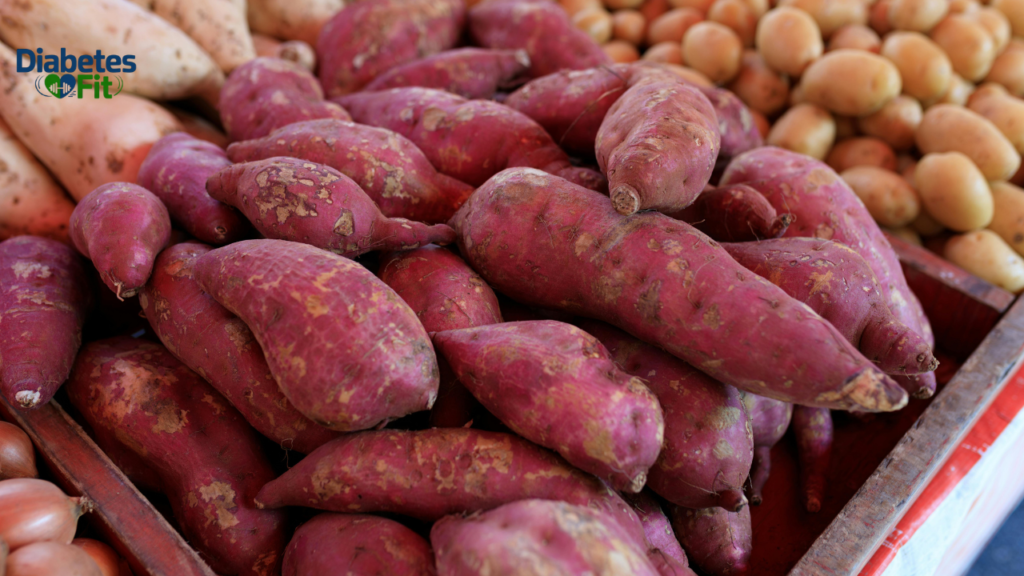
- Orange-fleshed sweet potato — the most common variety. High in beta-carotene, moderate GI. The standard recommendation.
- Purple sweet potato — contains powerful anthocyanin antioxidants (the same as blueberries). Some research suggests purple sweet potato may have a slightly lower GI and stronger anti-inflammatory properties. Excellent choice for diabetics.
- White/cream-fleshed sweet potato — lower beta-carotene but still good fiber content. GI varies by variety.
- Japanese sweet potato (purple skin, white flesh) — has been specifically studied in Japan for its blood sugar benefits. Research has shown that a compound called Caiapo extracted from white-skinned Japanese sweet potato can improve insulin sensitivity and lower fasting blood glucose in people with Type 2 diabetes.
If you have access to purple or Japanese sweet potato varieties, they may offer even greater benefits for diabetes management than the standard orange variety.
Common Myths About Sweet Potato and Diabetes — Cleared Up
Myth 1: “Sweet potato is too sweet for diabetics.” False. The natural sweetness comes primarily from fiber-bound sugars that digest slowly. It has a lower glycemic index than many “unsweetened” foods like white bread or crackers.
Myth 2: “Sweet potato and regular potato are basically the same for diabetics.” False. Their glycemic indices are dramatically different — especially when boiled. Sweet potato (GI ~44 boiled) vs. white potato (GI ~78 boiled) is a major difference in blood sugar impact.
Myth 3: “Diabetics can eat as many sweet potatoes as they want since it’s healthy.” False. Even healthy foods contain carbohydrates that affect blood sugar. Portion control remains essential — half a medium sweet potato per meal is the practical guideline for most diabetics.
Myth 4: “Sweet potato fries are a healthy diabetic snack.” False. Frying dramatically increases the glycemic index, adds unhealthy fats, and often introduces hidden sugars in coatings or seasonings. Boiled or steamed sweet potato is completely different from sweet potato fries.
Myth 5: “The skin should be removed before eating.” False — for diabetics, eating sweet potato with the skin is actually better. The skin contains additional fiber, potassium, and antioxidants. Leaving the skin on slows digestion slightly and adds nutritional value.
Is Sweet Potato Good for Diabetes in All Types? Type 1, Type 2, and Pre-Diabetes
Type 2 Diabetes
Sweet potato is a good food choice for Type 2 diabetics. Its low-to-medium GI, high fiber, and insulin-sensitizing compounds support the core goals of Type 2 management. Portion control and cooking method remain key.
Type 1 Diabetes
People with Type 1 diabetes can eat sweet potato — but because they manage insulin manually, careful carb counting is essential. Half a medium boiled sweet potato (~13g carbs) is a manageable portion that can be worked into an insulin dose calculation accurately.
Pre-Diabetes
For people with pre-diabetes trying to prevent progression to Type 2, sweet potato is an excellent food. Its fiber content, low GI, and adiponectin-stimulating compounds all support better insulin sensitivity — exactly what’s needed at this stage.
Gestational Diabetes
Sweet potato can be part of a gestational diabetes meal plan under the guidance of an OB or dietitian. The fiber and nutrient density are valuable during pregnancy, but carb portions need to be carefully managed and monitored with blood glucose testing.
Conclusion
So, is sweet potato good for diabetes? The answer, backed by nutrition science and practical experience, is a clear yes — with the right approach. Is sweet potato good for diabetes when eaten in enormous portions, baked to a high GI, alongside other starchy foods? No. But is sweet potato good for diabetes when eaten as half a medium boiled portion, paired with lean protein and vegetables, as part of a balanced meal? Absolutely — and it brings a remarkable package of fiber, antioxidants, potassium, magnesium, and blood-sugar-supporting compounds that few other starchy vegetables can match.
Is sweet potato good for diabetes long-term? Research on adiponectin, resistant starch, and anti-inflammatory antioxidants suggests yes — regular, moderate consumption of sweet potato supports better insulin sensitivity, lower oxidative stress, and improved cardiovascular health over time. For a diabetic looking to eat satisfying, nutritious, naturally sweet food without guilt, sweet potato deserves a regular place on the plate.
Try this starting this week: Boil a medium sweet potato with the skin on, cut it in half, and serve one half alongside grilled chicken and a generous portion of steamed broccoli. Check your blood sugar two hours later. Most diabetics are genuinely surprised by how manageable the reading is — and how satisfied they feel after the meal.
Sweet potatoes may help support blood sugar control when eaten in moderation. Some research published in PubMed Central suggests sweet potato compounds may benefit people with type 2 diabetes.
Frequently Asked Questions
Is sweet potato good for diabetes, or does it spike blood sugar?
Sweet potato is good for diabetes when eaten in appropriate portions and prepared correctly. Boiled or steamed sweet potato has a low-to-medium glycemic index of around 44–46, which causes a gradual, manageable blood sugar rise. Baked or fried sweet potato has a higher GI and should be eaten in smaller portions or avoided by those with stricter blood sugar targets.
How much sweet potato can a diabetic eat per day?
Most diabetics can safely eat half a medium sweet potato (about 65–80g cooked) per meal. This provides roughly 13–15g of carbohydrates — a manageable amount when paired with protein and non-starchy vegetables. Eating a whole large sweet potato in one sitting is generally too much for blood sugar management.
Is sweet potato better thana regular potato for diabetics?
Yes — significantly. A boiled sweet potato has a glycemic index of approximately 44, compared to around 78 for a boiled white potato. Sweet potato also contains more fiber, more vitamin A, and more blood-sugar-supporting compounds like adiponectin. For diabetics, sweet potato is the consistently safer and more nutritious choice.
What is the best way to cook sweet potatoes for diabetics?
Boiling or steaming with the skin on is the best cooking method for diabetics. These methods preserve more resistant starch, keep the glycemic index lower, and avoid the added fat of frying or roasting. Cooling boiled sweet potato in the fridge overnight further increases resistant starch content, lowering the glycemic impact even more.
Can Type 1 diabetics eat sweet potatoes?
Yes — people with Type 1 diabetes can include sweet potato in their diet, but careful carbohydrate counting is essential since they manage insulin manually. Half a medium boiled sweet potato contains approximately 13g of carbohydrates, which can be incorporated into an accurate insulin dose calculation with guidance from a healthcare provider.
Does sweet potato help lower blood sugar in diabetics?
Sweet potato doesn’t directly lower blood sugar the way medication does, but its compounds — including fiber, resistant starch, magnesium, and adiponectin-stimulating proteins — support better insulin sensitivity and more stable blood glucose over time. Regular moderate consumption as part of a balanced diabetic diet contributes to improved long-term blood sugar control.

David Miller is a health and wellness writer focused on diabetes awareness, blood sugar control, and healthy living. He creates clear, practical content to help readers make better everyday health choices.