Is Watermelon Good for Diabetes? 7 Surprising Facts Every Diabetic Must Know
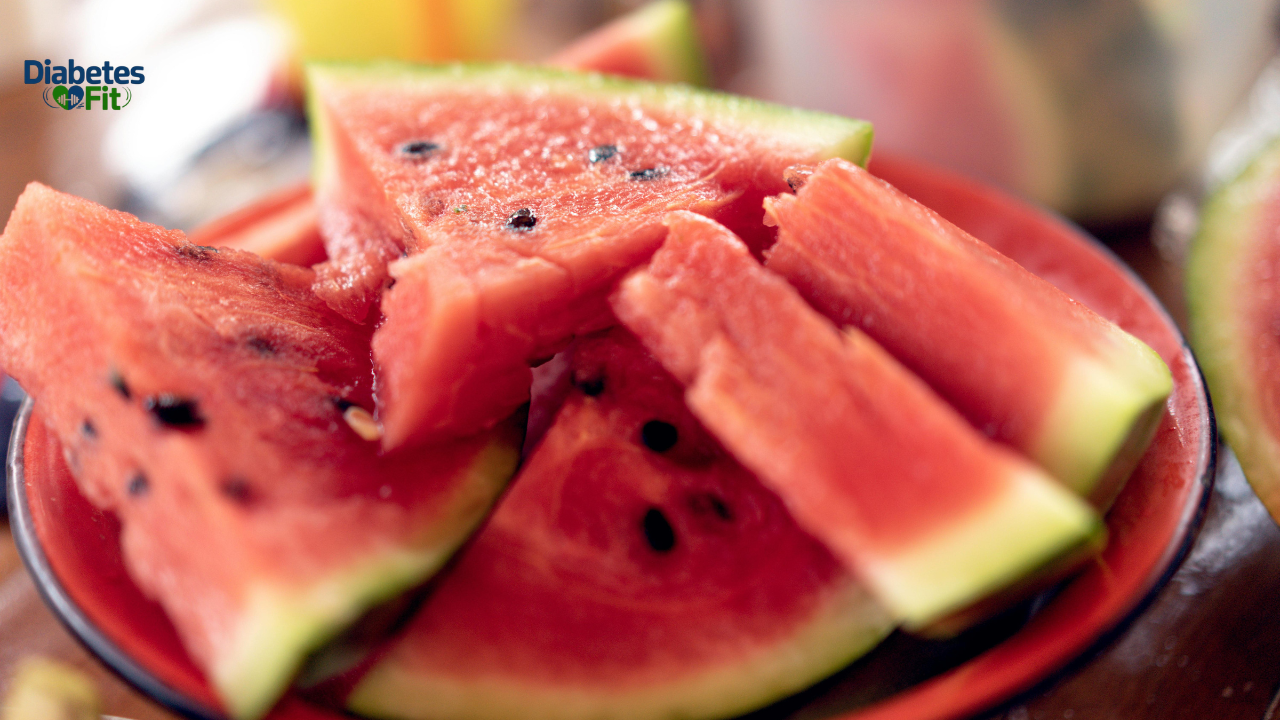
Summer arrives, and everyone reaches for a cold slice of watermelon. But if you have diabetes, you pause and wonder — is watermelon good for diabetes, or will it send my blood sugar through the roof? This is one of the most commonly asked questions among people managing diabetes, and the answer surprises most people. Yes, watermelon has a high glycemic index. But the full story is far more nuanced than that single number suggests. Is watermelon good for diabetes when eaten in the right portion?
Is watermelon good for diabetes when paired correctly with other foods? The answers to both questions are genuinely encouraging. This guide covers the complete science — glycemic index versus glycemic load, nutritional benefits, safe serving sizes, smart pairing strategies, and everything you need to enjoy one of summer’s greatest pleasures without compromising your blood sugar control.
Along with choosing the right fruits, it’s also important to pick diabetes-friendly drinks—check out our post Best Alcohols for Diabetics for helpful tips.
What Makes Watermelon Complicated for Diabetics
Before answering whether watermelon is good for diabetes, you need to understand two concepts that most people — and even many doctors — confuse: glycemic index and glycemic load.
Glycemic Index vs Glycemic Load — The Critical Difference
Glycemic Index (GI) measures how quickly a food raises blood glucose on a scale of 0 to 100, based on eating 50 grams of available carbohydrate from that food.
Glycemic Load (GL) is far more clinically meaningful. It accounts for both the GI AND how many carbohydrates are actually in a realistic serving of the food.
GL Formula: GL = (GI × grams of carbohydrate per serving) ÷ 100
Here is where watermelon’s story completely changes:
| Measurement | Watermelon Value | Category |
| Glycemic Index (GI) | 72 | High (above 70) |
| Carbs per 100g serving | 7.6g | Very low |
| Carbs per 1 cup (152g) serving | 11.5g | Low |
| Glycemic Load per 1 cup | 72 × 11.5 ÷ 100 = 8.3 | Low (below 10) |
A glycemic load of 8.3 is classified as LOW — under 10. This means that despite watermelon’s high glycemic index, a realistic one-cup serving has a low overall impact on blood sugar because the actual carbohydrate content per serving is so small.
This is the key scientific reason why watermelon is good for diabetes is not a simple yes or no — it is a nuanced yes, with portion control as the critical variable.
Nutritional Profile of Watermelon
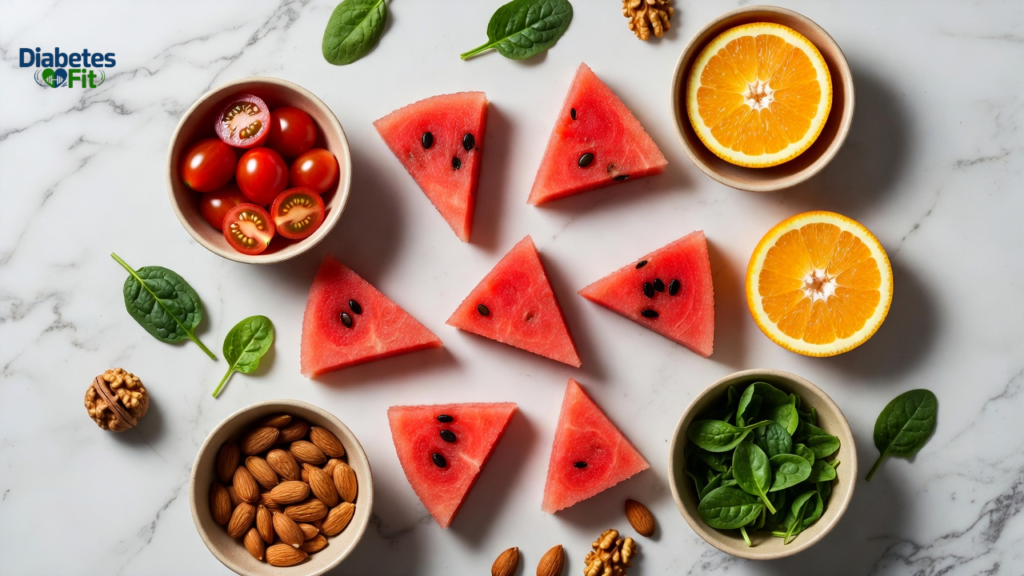
Understanding whether watermelon is good for diabetes requires looking beyond just sugar content at the complete nutritional picture.
Watermelon Nutrition Per 1 Cup (152g, diced)
| Nutrient | Amount | Benefit for Diabetics |
| Calories | 46 kcal | Very low calorie density |
| Total carbohydrates | 11.5g | Low in a controlled portion |
| Natural sugars | 9.4g | Fructose + glucose mix |
| Dietary fiber | 0.6g | Modest but present |
| Water content | 139g (92%) | Hydration + satiety |
| Vitamin C | 12.3mg (14% DV) | Antioxidant, immune support |
| Vitamin A | 865 IU (17% DV) | Eye and skin health |
| Lycopene | 6,890 mcg | Powerful antioxidant |
| Citrulline | 250mg | Blood pressure, circulation |
| Potassium | 170mg | Blood pressure regulation |
| Magnesium | 15mg | Insulin sensitivity support |
Watermelon is 92% water — making it one of the most hydrating foods available. This high water content is precisely why the carbohydrate concentration per gram is so low despite the high GI.
Is Watermelon Good for Diabetes: 7 Surprising Facts
Fact 1: The Glycemic Load Is Actually Low
As established above, whether watermelon is good for diabetes becomes a very different question when you look at glycemic load rather than glycemic index alone.
A one-cup serving of watermelon has a GL of approximately 8, classified as low. Compare this to other foods diabetics routinely eat:
| Food | GI | GL per Serving | Diabetic Impact |
| Watermelon (1 cup) | 72 | 8 | Low |
| White bread (1 slice) | 75 | 11 | Medium |
| Brown rice (½ cup) | 50 | 16 | Medium |
| Banana (medium) | 51 | 13 | Medium |
| Orange (medium) | 43 | 5 | Low |
| Apple (medium) | 36 | 6 | Low |
| Dates (2 pieces) | 42 | 18 | High |
| Raisins (2 tbsp) | 64 | 20 | High |
Watermelon’s glycemic load per realistic serving is actually lower than that of a slice of brown bread or half a cup of brown rice. This reframes the question of whether watermelon is good for diabetes entirely — the answer is clearly yes, in controlled portions.
Fact 2: Lycopene in Watermelon Protects Diabetic Hearts
Is watermelon good for diabetes beyond just blood sugar? Absolutely — and the lycopene content is a major reason why.
Watermelon is the richest dietary source of lycopene, even richer than tomatoes when compared by weight. A single cup of watermelon provides approximately 6,890 mcg of lycopene.
Why this matters specifically for diabetics:
People with diabetes have a two to four times higher risk of cardiovascular disease than the general population. Oxidative stress and inflammation — both elevated in diabetes — accelerate arterial damage and plaque formation.
Lycopene is a powerful antioxidant that:
- Reduces LDL cholesterol oxidation — the primary driver of arterial plaque
- Lowers systemic inflammation markers, including C-reactive protein (CRP)
- Reduces blood pressure modestly through improved arterial elasticity
- Has been associated in multiple studies with reduced cardiovascular mortality
A meta-analysis found that higher lycopene intake was associated with a 17% reduction in cardiovascular disease risk — a meaningful benefit for a diabetic population where heart disease is the leading cause of death.
Fact 3: Citrulline Supports Blood Pressure and Circulation
Watermelon is the richest natural food source of L-citrulline — an amino acid the body converts to L-arginine, which then produces nitric oxide.
Nitric oxide:
- Relaxes and widens blood vessels (vasodilation)
- Improves blood flow throughout the body
- Reduces blood pressure
- Improves circulation to extremities — critical for diabetics prone to peripheral neuropathy and poor circulation in feet and legs
A clinical study found that watermelon extract supplementation significantly reduced blood pressure in adults with prehypertension. For diabetics — who have high rates of hypertension — this is a clinically meaningful benefit from a whole food source.
Fact 4: High Water Content Supports Weight Management
Is watermelon good for diabetes, partly because of its extraordinary water content? Yes — and this is an underappreciated benefit.
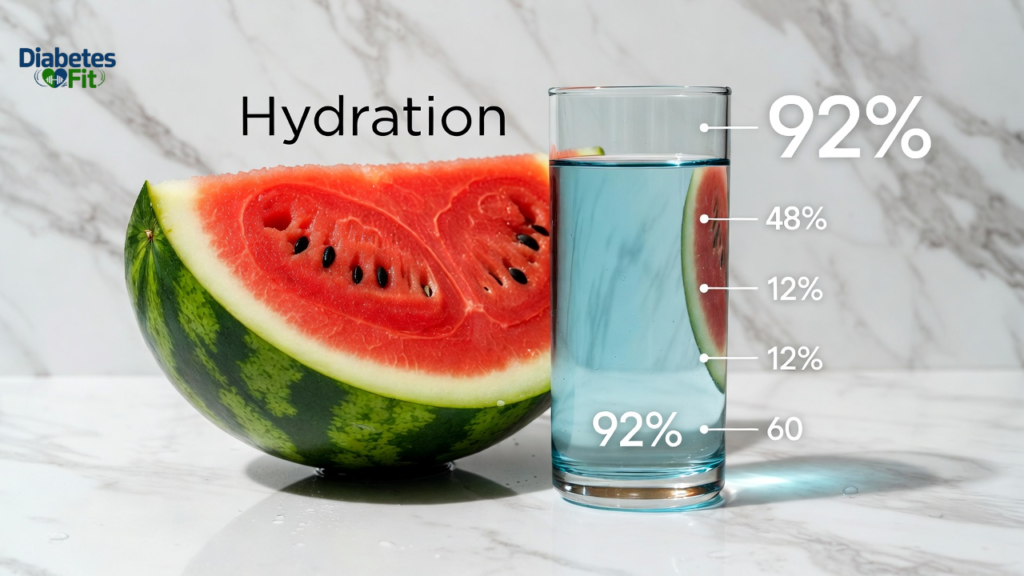
At 92% water and only 46 calories per cup, watermelon is one of the most volume-efficient foods available. Eating a large, satisfying portion of watermelon provides:
- High sensory satisfaction (sweet, cold, refreshing)
- Significant stomach volume and stretch
- Minimal caloric impact
- Strong hydration
For diabetics where weight management is central to glycemic control, replacing high-calorie snacks — chips, cookies, sweetened yogurt — with a large serving of cold watermelon can meaningfully reduce overall calorie intake while providing genuine satisfaction.
Snack calorie comparison:
| Snack | Calories | Carbs | Satiety |
| Watermelon (2 cups) | 92 cal | 23g | High volume |
| Crackers (10 pieces) | 150 cal | 22g | Low volume |
| Sweetened yogurt (1 cup) | 170 cal | 34g | Medium |
| Small chocolate bar | 220 cal | 28g | Very low |
| Apple with peanut butter | 190 cal | 20g | High |
Fact 5: Magnesium Content Supports Insulin Sensitivity
Watermelon contains a meaningful amount of magnesium — a mineral that plays a direct role in insulin signaling and glucose metabolism.
Magnesium is a cofactor for over 300 enzymatic reactions in the human body, including those involved in insulin receptor function and glucose transport into cells. Multiple large studies have found that magnesium deficiency is significantly more common in people with Type 2 diabetes than in the general population — and that adequate magnesium intake is associated with improved insulin sensitivity.
While a single cup of watermelon provides only 15mg of magnesium (approximately 4% of the daily value), regular consumption contributes to overall magnesium intake alongside other dietary sources.
Fact 6: Vitamin C Reduces Diabetic Oxidative Stress
A single cup of watermelon provides 14% of the daily recommended vitamin C.
In diabetes, chronically elevated blood glucose increases production of free radicals through a process called glycation — the same chemical process that HbA1c measures. These free radicals damage blood vessels, nerves, kidneys, and eyes — the classic diabetic complications.
Vitamin C is one of the body’s primary water-soluble antioxidants. It directly neutralizes free radicals and regenerates other antioxidants, including vitamin E. Studies have shown that regular vitamin C intake reduces markers of oxidative stress in people with Type 2 diabetes and may modestly reduce fasting blood glucose and HbA1c over time.
Fact 7: Watermelon Seeds Are Surprisingly Beneficial
Many people discard watermelon seeds without knowing they are actually nutritionally valuable — particularly for diabetics.
Watermelon seeds contain:
- Magnesium — supports insulin sensitivity
- Zinc — critical for insulin production, storage, and secretion in pancreatic beta cells
- Healthy fats — primarily monounsaturated and polyunsaturated
- Protein — modest but present
Dried watermelon seeds (available in health food stores) can be eaten as a zinc and magnesium-rich snack. Some research suggests watermelon seed extract has mild hypoglycemic properties, though this evidence is preliminary.
Is Watermelon Good for Diabetes: Safe Portion Guide
The most important practical answer to whether watermelon is good for diabetes is the portion size guide. This is where most diabetics get into trouble — not from watermelon itself, but from eating too much of it at one time.
Recommended Portions by Diabetes Status
| Diabetes Status | Safe Serving | Carbs | GL |
| Well-controlled T2D (A1C below 7%) | 1 – 1.5 cups (150–225g) | 11–17g | 8–12 |
| Moderately controlled T2D (A1C 7–8%) | ¾ – 1 cup (115–150g) | 9–12g | 6–9 |
| Poorly controlled T2D (A1C above 8%) | ½ cup (75g) maximum | 6g | 4 |
| Prediabetes | 1 – 1.5 cups | 11–17g | 8–12 |
| Type 1 diabetes | ½ – 1 cup with insulin adjustment | 6–12g | 4–9 |
Critical rule: Never eat more than one and a half cups of watermelon in a single sitting. Larger portions — three to four cups — dramatically increase the glycemic load to 25–35, producing significant blood sugar elevation.
How to Eat Watermelon Safely With Diabetes
Knowing whether watermelon is good for diabetes also means knowing how to eat it in ways that minimize blood sugar impact.
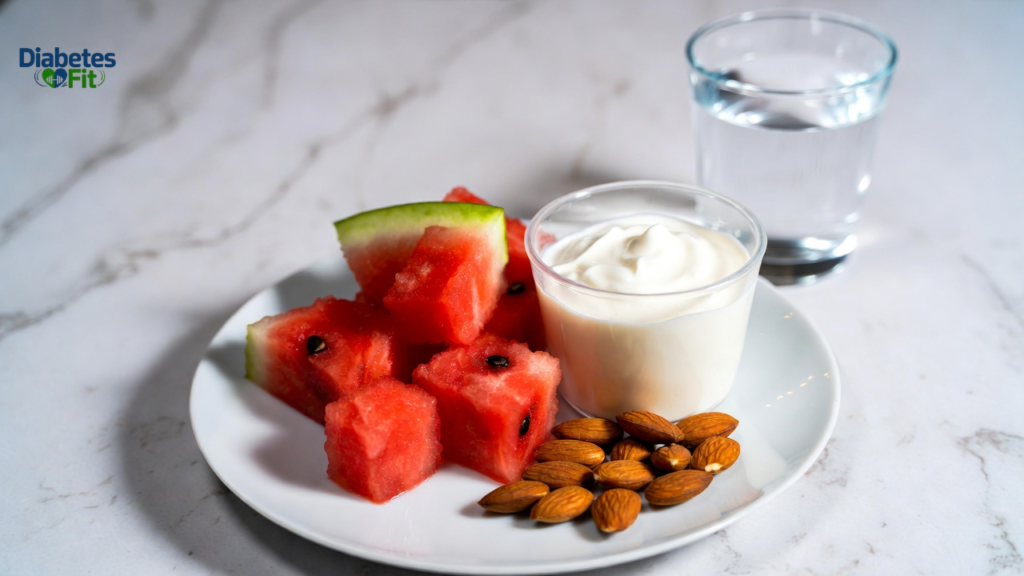
Strategy 1: Always Pair Watermelon With Protein or Fat
Eating watermelon alone produces a faster blood sugar rise because there is nothing to slow gastric emptying and glucose absorption. Pairing watermelon with a protein or healthy fat source blunts the glycemic response significantly.
Best watermelon pairings for diabetics:
- Watermelon + 100g plain Greek yogurt
- Watermelon + 30g feta cheese (classic Mediterranean combination)
- Watermelon + 15–20 almonds or walnuts
- Watermelon + 2 tablespoons of cottage cheese
- Watermelon + a small handful of pumpkin seeds
- Watermelon + a boiled egg
The protein and fat slow gastric emptying, meaning glucose enters the bloodstream more slowly, and the insulin response is smoother and more manageable.
Strategy 2: Eat Watermelon After a Protein-Rich Meal
The same principle applies to meal timing. Eating watermelon as part of or after a meal containing protein and vegetables produces a much lower glucose spike than eating watermelon on an empty stomach.
Eating protein and vegetables first, then watermelon as a dessert portion, is one of the smartest strategies for enjoying it without glycemic consequences.
Strategy 3: Choose Fresh Watermelon Over Juice
Watermelon juice completely removes the dietary fiber that moderates glucose absorption and dramatically concentrates the sugar content. A single glass of watermelon juice can contain the sugar equivalent of three to four cups of fresh watermelon — with none of the satiety.
For diabetics, fresh whole watermelon is always preferable to:
- Watermelon juice
- Watermelon smoothies with added fruit
- Watermelon sorbet or popsicles with added sugar
- Watermelon-flavored candies or drinks
Strategy 4: Eat Chilled Watermelon
Cold food raises blood sugar more slowly than room-temperature food because cold temperature slows gastric emptying slightly. Eating cold, refrigerated watermelon is preferable to warm or room-temperature fruit.
Strategy 5: Check Blood Sugar Response
Is watermelon good for diabetes for YOU specifically? The only way to know for certain is to check your own blood glucose response.
Individual responses to watermelon vary significantly based on:
- Current insulin sensitivity
- Medication type and dose
- What you ate before or with the watermelon
- Time of day (morning glucose sensitivity is typically lower)
- Stress and sleep quality
Test protocol:
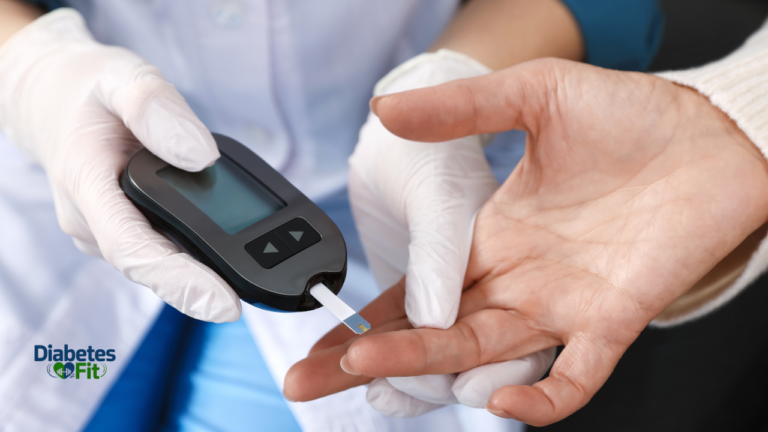
- Check blood glucose before eating watermelon
- Eat one cup with a protein pairing
- Check blood glucose at 30 minutes and 2 hours
- If the two-hour reading is above 180 mg/dL, reduce the portion or change the pairing
Foods to Avoid Combining With Watermelon
Just as the right pairings improve watermelon’s safety for diabetics, some combinations make it worse:
- Watermelon + white bread or crackers — double glycemic load
- Watermelon + juice or soda — extreme sugar concentration
- Watermelon + other high-sugar fruits — rapid glucose spike
- Watermelon + sweetened yogurt — hidden sugar addition
- Watermelon on an empty stomach after fasting — rapid absorption, sharp spike
Real-Life Example
Ahmed, 56, with Type 2 diabetes and an A1C of 7.4%, loved watermelon but had completely avoided it for two years after his diagnosis. His nutritionist explained the glycemic load concept and gave him a structured protocol.
Ahmed began eating one cup of fresh, chilled watermelon with 100g of plain Greek yogurt every afternoon as his snack. He tested his blood sugar before and two hours after eating this combination for two weeks.
His average two-hour post-snack glucose reading: 148 mg/dL — well within the under-180 target for post-meal glucose. His fasting glucose levels on the following mornings showed no meaningful change from his previous baseline.
Ahmed had enjoyed watermelon every day for two weeks without any negative impact on his diabetes control. Understanding that watermelon is good for diabetes — with the right portion and pairing — completely changed his relationship with a food he had unnecessarily eliminated.
Comparison: Watermelon vs Other Summer Fruits for Diabetics
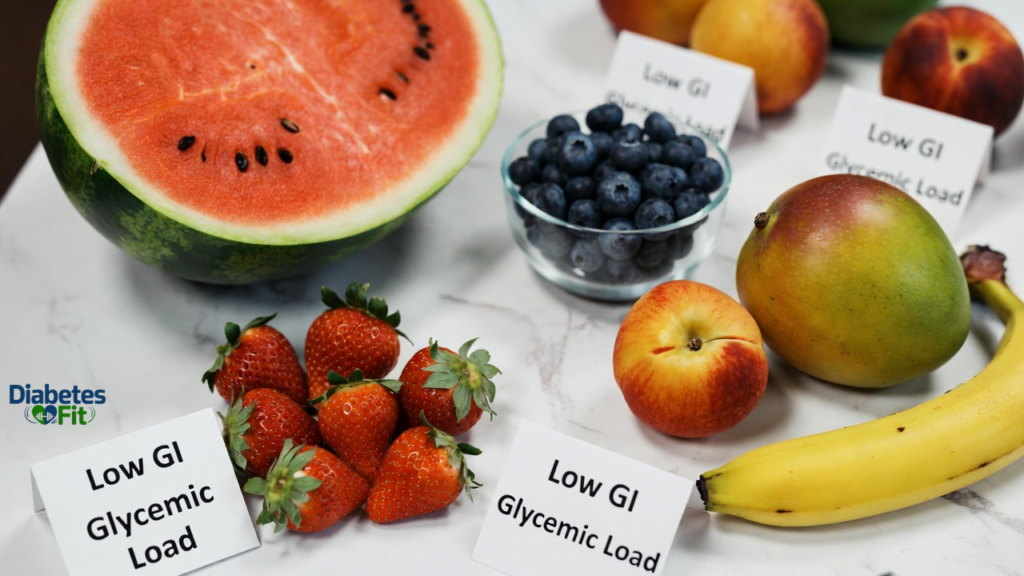
| Fruit | GI | GL per Serving | Diabetic Friendliness |
| Watermelon (1 cup) | 72 | 8 | ✅ Good with portion control |
| Strawberries (1 cup) | 40 | 3.6 | ✅ Excellent |
| Blueberries (¾ cup) | 53 | 6 | ✅ Excellent |
| Peach (medium) | 42 | 5 | ✅ Excellent |
| Mango (½ cup) | 51 | 8 | ✅ Good in small portions |
| Pineapple (½ cup) | 59 | 7 | ✅ Good in small portions |
| Grapes (1 cup) | 59 | 11 | ⚠️ Moderate caution |
| Banana (medium) | 51 | 13 | ⚠️ Moderate caution |
| Dates (3 pieces) | 42 | 18 | ❌ Avoid large amounts |
Watermelon compares favorably to most summer fruits when portion-controlled — its GL is lower than a banana and comparable to mango and pineapple.
Conclusion
So, is watermelon good for diabetes? Based on everything the science shows — yes, absolutely, when eaten correctly. Is watermelon good for diabetes in large, uncontrolled amounts? No — and that is the entire key to this answer.
Is watermelon good for diabetes because of its low glycemic load per serving, its extraordinary lycopene content, its citrulline for circulation, its vitamin C for oxidative stress protection, and its hydration support? Yes on every count. Is watermelon good for diabetes when paired with protein, eaten in one-cup portions, and checked with a glucose meter to confirm your personal response? Without question.
Is watermelon good for diabetes as a daily summer snack for people with well-controlled blood sugar? The evidence supports yes — with one cup maximum, paired with protein, eaten as part of a meal rather than alone. Is watermelon good for diabetes? Better understood as a question of how rather than whether? Absolutely.
Stop avoiding watermelon out of fear and start enjoying it intelligently. Is watermelon good for managing diabetes well? The answer is a refreshing, science-backed yes.
Check your blood sugar before and two hours after your first watermelon snack with protein pairing. Your glucose meter will give you the most personalized answer possible — and it will likely be more encouraging than you expected.
For a more detailed explanation of how watermelon affects blood sugar levels, you can read this medically reviewed guide on Medical News Today.
Frequently Asked Questions
Is watermelon good for diabetes, or does it spike blood sugar?
Watermelon has a high glycemic index of 72 but a low glycemic load of approximately 8 per one-cup serving — because its actual carbohydrate content per realistic portion is very low at 11.5g. This means a controlled one-cup serving with protein pairing produces a modest, manageable blood sugar rise for most diabetics. Eating three to four cups at once, however, produces a significant glucose spike. Portion control transforms is watermelon good for diabetes from a concern into a genuine yes.
How much watermelon can a diabetic eat per day?
Most people with well-controlled Type 2 diabetes can safely eat one to one and a half cups (150–225g) of fresh watermelon per day, ideally paired with protein. People with poorly controlled diabetes or an A1C above 8% should limit to half a cup maximum. Never eat more than one and a half cups in a single sitting, regardless of overall control status — spreading intake and pairing with protein is the key to managing the glycemic response safely.
What is the glycemic index of watermelon for diabetics?
Watermelon’s glycemic index is 72 — classified as high. However, the glycemic load per one-cup serving is only 8, classified as low. The glycemic load is more clinically meaningful for diabetics because it accounts for the actual amount of carbohydrate in a realistic serving. Most diabetes nutritionists now use glycemic load rather than glycemic index alone when advising patients about fruit choices, which is why watermelon is not as problematic as its GI number suggests.
Can watermelon raise A1C in diabetics?
Eating watermelon in controlled portions — one cup paired with protein — is unlikely to meaningfully raise A1C. A1C reflects average blood glucose over three months, and a modest one-cup serving of watermelon daily would contribute very modestly to overall glucose load. Eating large uncontrolled amounts of watermelon daily over months could contribute to elevated A1C — but this is true of any carbohydrate food. Portion control and pairing strategy prevent watermelon from becoming an A1C problem.
Is watermelon juice safe for diabetics?
No — watermelon juice is not safe for diabetics and should be avoided. Juicing removes the fiber, concentrates the sugar, and eliminates the satiety that comes from eating whole fruit. A single glass of watermelon juice (250ml) contains the sugar equivalent of three to four cups of fresh watermelon with none of the volume that slows eating and digestion. Always choose fresh whole watermelon over juice, smoothies, or any processed watermelon product.
What is the best time for diabetics to eat watermelon?
The best time for diabetics to eat watermelon is as an afternoon snack paired with protein — such as Greek yogurt or a small handful of nuts — or as a dessert portion after a protein and vegetable-rich meal. Avoid eating watermelon first thing in the morning on an empty stomach or late at night. Post-meal consumption with food already in the stomach significantly blunts the glucose response compared to eating watermelon alone.
Are watermelon seeds good for diabetics?
Yes — watermelon seeds are actually beneficial for diabetics. They contain magnesium (which supports insulin sensitivity), zinc (critical for insulin production and storage in pancreatic beta cells), healthy fats, and modest protein. Dried roasted watermelon seeds make an excellent low-carbohydrate, mineral-rich snack for diabetics. Some preliminary research suggests watermelon seed extracts may have mild blood glucose-lowering properties, though more clinical evidence is needed.

David Miller is a health and wellness writer focused on diabetes awareness, blood sugar control, and healthy living. He creates clear, practical content to help readers make better everyday health choices.