
Does Vaping Affect Blood Sugar? The Alarming Truth Every Diabetic Must Know
If you vape and have diabetes — or are at risk of developing it — you’ve probably asked yourself: does vaping affect blood sugar? It’s a critical question, and the answer is more alarming than most people realize.
Vaping is often marketed as a safer alternative to cigarettes. But “safer than cigarettes” doesn’t mean safe — especially for your blood sugar and metabolic health. Growing research shows that vaping can significantly impact blood sugar regulation, insulin sensitivity, and the long-term risk of developing type 2 diabetes.
Whether you vape with nicotine, use nicotine-free e-cigarettes, or are simply trying to understand the risks before making a decision, this article gives you the honest, science-backed answers you need. We cover exactly how vaping affects blood sugar, the mechanisms behind it, and what it means for your health — short-term and long-term.
Along with lifestyle habits like avoiding vaping, your diet matters too—read our post Best Cereal for Diabetics for smart breakfast choices.
What Is Vaping and How Does It Work?
Vaping is the process of inhaling an aerosol created by utilizing an electrical device to heat a liquid, often known as e-liquid or vape juice. The aerosol is made up of a mix of:
- Nicotine (found in the majority of items, though there are nicotine-free variants)
- Carrier liquids include vegetable glycerin and propylene glycol.
- Dozens of chemical substances are frequently used as flavorings.
- Heavy metals from the heating coil, such as lead, nickel, and chromium
- Ultrafine particles that pierce lung tissue deeply
Vaping does not produce tar or tobacco smoke like regular cigarettes do. Its “safer” reputation stems from this. However, the chemicals breathed while vaping — particularly nicotine and the byproducts of heated flavorings — have substantial impacts on the body’s metabolic processes, including blood sugar management.
Does Vaping Affect Blood Sugar? The Science Explained
Indeed, vaping has an impact on blood sugar through a variety of mechanisms. Here’s a thorough explanation of how it occurs:

1. Nicotine Increases Blood Sugar Directly
The main way that vaping influences blood sugar levels is through nicotine. Whether from a cigarette or a vape device, inhaling nicotine sets off a series of physiological reactions:
- Nicotine causes the adrenal glands to generate adrenaline (epinephrine), which instructs the liver to release stored glucose (glycogen) into the bloodstream.
- Cortisol spike: Nicotine also increases cortisol levels, and cortisol is a stress hormone that causes blood sugar levels to rise.
- Nicotine causes the pancreas to secrete more glucagon, which increases blood sugar levels by causing the liver to produce glucose.
As a result, even if you have not eaten anything, your blood sugar climbs quickly after every vaping session.
The body makes up for this by releasing more insulin in those without diabetes. However, this compensation is compromised in those with type 1 or type 2 diabetes, resulting in protracted, possibly hazardous blood sugar increases following each vaping session.
2. Vaping Causes Insulin Resistance
This is possibly the most worrisome long-term effect of vaping on blood sugar. Your cells do not react to insulin, the hormone that transports glucose from your blood into your cells for energy, correctly if you have insulin resistance. When cells develop insulin resistance:

- After meals, blood sugar remains raised for a longer period of time.
- To make up for this, the pancreas must create an increasing amount of insulin.
- The pancreas eventually runs out of energy and is unable to continue.
- Prediabetes and type 2 diabetes are the primary results of this process.
Nicotine exposure, even from e-cigarettes, dramatically reduces insulin signaling in muscle, fat, and liver cells, according to research published in the journal Cell Metabolism. This indicates that nicotine from vaping directly causes cellular insulin resistance.
Even after adjusting for age, body weight, and other lifestyle characteristics, current e-cigarette users had a considerably higher risk of insulin resistance than non-users, according to a 2016 study published in PLOS ONE.
3. Vaping Induces Inflammation, Which Affects Blood Sugar
One of the main causes of insulin resistance and blood sugar dysregulation is chronic inflammation. Vaping increases systemic inflammation in many ways:

- Oxidative stress: Free radicals produced by the compounds in vape aerosol harm cells and cause inflammatory reactions.
- Lung inflammation: Vaping significantly inflames the lung tissue and airways, which leads to systemic inflammation.
- Vaping causes endothelial dysfunction, which damages the blood vessel lining and raises inflammatory indicators all across the body.
Elevated inflammatory markers — including C-reactive protein (CRP), interleukin-6 (IL-6), and tumor necrosis factor alpha (TNF-α) — are strongly associated with insulin resistance and impaired blood sugar control.
For diabetics, this additional layer of inflammation makes blood sugar management significantly harder and increases the risk of diabetic complications.
4. Vaping Damages the Pancreas
The pancreas is responsible for producing insulin — the hormone that controls blood sugar. Emerging research suggests that chemicals in vape aerosol may directly damage pancreatic cells.
A study published in iScience (2019) found that exposure to e-cigarette vapor caused significant oxidative stress and DNA damage in pancreatic cells — including the beta cells responsible for insulin production.
Damaged beta cells produce less insulin, which directly impairs the body’s ability to regulate blood sugar. For people already managing diabetes, any reduction in beta cell function makes the condition harder to control and accelerates its progression.
5. Nicotine-Free Vaping Still Affects Blood Sugar
Many people assume that nicotine-free e-cigarettes are completely safe and don’t affect blood sugar. This is a dangerous misconception.
Even without nicotine, vape aerosol contains:
- Propylene glycol and vegetable glycerin — when heated, these produce acrolein and other toxic aldehydes that promote inflammation and oxidative stress
- Flavoring chemicals — including diacetyl, acetoin, and cinnamaldehyde, which have been shown to damage lung and vascular tissue and promote inflammatory responses
- Heavy metals — from the heating coil, which accumulate in the body and have been linked to insulin resistance and metabolic dysfunction
- Ultrafine particles — that trigger systemic inflammatory responses
A 2018 study published in Frontiers in Physiology found that even nicotine-free e-cigarette vapor caused significant oxidative stress and impaired glucose metabolism in animal models.
The bottom line: Does vaping affect blood sugar even without nicotine? Yes — the chemicals in the aerosol itself cause metabolic harm independently of nicotine.
6. Vaping Disrupts Sleep — Which Raises Blood Sugar
This indirect route is frequently disregarded. The stimulant nicotine from vaping impairs the quality of sleep, especially deep and REM sleep. Blood sugar is directly and consistently impacted by inadequate sleep:
- boosts blood sugar levels by raising cortisol levels.
- reduces insulin sensitivity by as much as 40% following even one restless night.
- causes overindulgence in high-carb foods by increasing the hunger hormone ghrelin and decreasing the satiety hormone leptin.
- raises inflammatory markers that hinder the metabolism of glucose.
In healthy young individuals, limiting sleep to 4 hours each night for just 6 days decreased insulin sensitivity by 40%, according to a study published in the Annals of Internal Medicine. In addition to the direct effects of nicotine, this adds a substantial layer of blood sugar dysregulation for someone who routinely vapes and has chronic sleep disruption.
7. Stress hormones and vaping: a vicious cycle
Nicotine causes your body’s main stress hormones, cortisol and adrenaline, to be released each time you vape. As part of the fight-or-flight response, these two hormones increase blood sugar. The vicious cycle is as follows:
- When you vape, nicotine causes adrenaline and cortisol, which raises blood sugar.
- An insulin reaction to a blood sugar surge results in a reduction in blood sugar.
- Cravings are triggered by a drop in blood sugar, so you vape again to deal with stress or cravings.
The cycle is repeated several times every day. Because each blood sugar surge necessitates greater insulin management—through medication, dietary changes, or both—this loop is very harmful to diabetics. Over time, the repeated spikes and the chronic cortisol elevation make blood sugar control increasingly difficult and increase the risk of long-term complications.
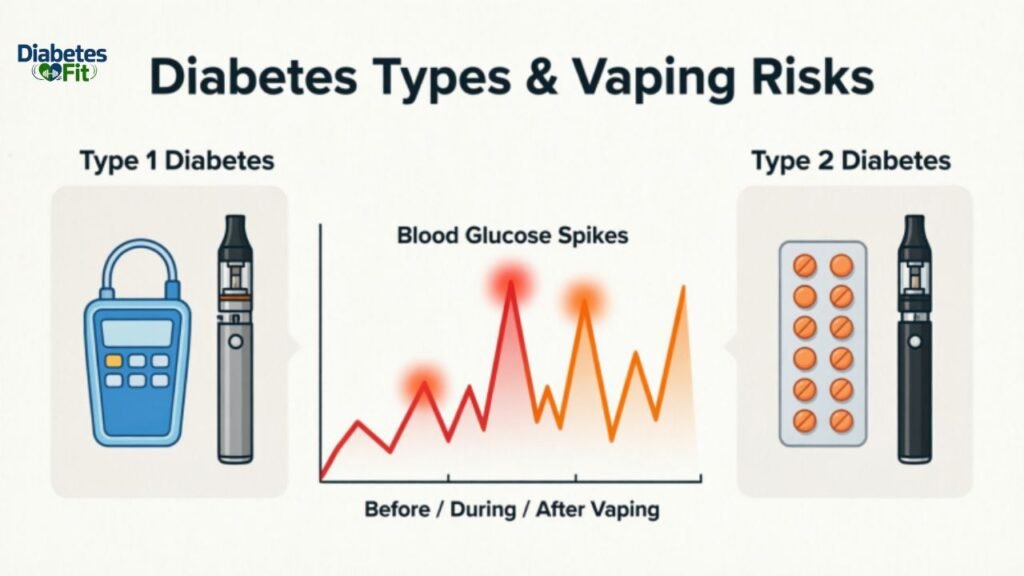
Does Vaping Affect Blood Sugar Differently in Type 1 vs Type 2 Diabetes?
Yes — vaping affects blood sugar in both types of diabetes, but the mechanisms and consequences differ:
| Factor | Type 1 Diabetes | Type 2 Diabetes |
| Insulin production | None (immune destruction of beta cells) | Reduced or impaired |
| Nicotine’s primary effect | Raises blood sugar via adrenaline/cortisol | Raises blood sugar + worsens insulin resistance |
| Insulin resistance impact | Less relevant (already insulin-dependent) | Directly worsens the core disease mechanism |
| Blood sugar spike management | Requires immediate insulin dose adjustment | Harder to control with oral medications |
| Risk of complications | Increased (spikes accelerate neuropathy, retinopathy) | Increased (accelerates cardiovascular and kidney disease) |
| Long-term risk | Harder to maintain HbA1c targets | Accelerates progression to insulin dependence |
For people with Type 1 diabetes, vaping’s primary danger is the unpredictable blood sugar spikes that make insulin dosing harder to calculate — increasing both hyperglycemia and hypoglycemia risk.
For people with Type 2 diabetes, vaping is especially harmful because it directly worsens insulin resistance — the core problem driving the disease. Every vaping session makes the underlying condition worse.
Vaping vs. Smoking: Which Is Worse for Blood Sugar?
This is a common question — and the honest answer is that both are harmful to blood sugar, but in different ways:
| Factor | Cigarette Smoking | Vaping |
| Nicotine delivery | High | High (often higher in modern pod devices) |
| Blood sugar spike | Yes — via nicotine | Yes — via nicotine |
| Insulin resistance | Yes | Yes — similar or potentially worse |
| Inflammation | Yes — from tar and combustion products | Yes — from aerosol chemicals |
| Pancreatic damage | Yes | Emerging evidence suggests yes |
| Cardiovascular risk | Very high | High (lower than smoking but still significant) |
| Long-term diabetes risk | 30–40% higher risk vs non-smokers | Emerging data — likely similar elevation |
| Withdrawal effects on blood sugar | Blood sugar improves after quitting | Blood sugar improves after quitting |
The key takeaway: vaping is not a safe alternative for diabetics. While it may carry slightly lower cardiovascular risk than traditional smoking, its effects on blood sugar regulation, insulin resistance, and pancreatic health are alarmingly similar.
How Much Does Vaping Raise Blood Sugar? Real Numbers
While individual responses vary based on nicotine concentration, frequency of vaping, and baseline health, research gives us some reference points:
| Scenario | Estimated Blood Sugar Impact |
| Single vaping session (nicotine) | Raises blood glucose by 20–40 mg/dL within 30 minutes |
| Regular daily vaping | Increases HbA1c by 0.5–1.5% over time in diabetics |
| Chronic vaping + poor diet | Can increase fasting blood glucose by 15–25 mg/dL above baseline |
| Vaping before a meal | Exaggerates post-meal blood sugar spike by 15–30% |
| Quitting vaping | Blood sugar begins improving within 2–4 weeks |
These numbers highlight why vaping affects blood sugar is such an important one for anyone managing diabetes or at risk of developing it. Even modest, consistent elevations in blood sugar accelerate the development of diabetic complications, including neuropathy, retinopathy, nephropathy, and cardiovascular disease.
Signs That Vaping May Be Affecting Your Blood Sugar
Keep an eye out for these warning indicators that your blood sugar regulation may be compromised if you vape and have diabetes or prediabetes:
- Unexpected rises in blood sugar, particularly following vaping sessions
- HbA1c values that are higher than anticipated while adhering to your diet
- Frequent urination and increased thirst are classic indicators of high blood sugar.
- Brain fog and exhaustion, especially after vaping
- Target blood sugar values are difficult to reach even when medicine is taken as prescribed.
- Increased insulin needs without a clear dietary cause
Inadequate wound healing is indicative of persistently elevated blood sugar levels. High blood sugar weakens the immune system and causes frequent infections. Consult your physician or endocrinologist right away if you observe any of these symptoms. Bring up your vaping habit; it could be a major cause of your blood sugar issues.
What Happens to Blood Sugar When You Quit Vaping?
The good news is that blood sugar control improves meaningfully after quitting vaping. Here’s what the research and clinical experience show:
| Timeline After Quitting | Blood Sugar Changes |
| 24–72 hours | Nicotine clears the system; cortisol and adrenaline levels begin to normalize |
| 1–2 weeks | Fasting blood glucose may begin to decrease; insulin sensitivity starts improving |
| 2–4 weeks | Inflammatory markers begin to reduce; blood sugar spikes after meals become less severe |
| 1–3 months | Insulin sensitivity measurably improves; HbA1c may begin to decline |
| 3–6 months | Significant improvement in overall blood sugar control; reduced medication needs possible |
| 6–12 months | Cardiovascular and metabolic risk profile continues improving |
Important note: When quitting, some people temporarily experience weight gain, which can affect blood sugar. Work with your healthcare provider to manage this transition and adjust your diabetes management plan accordingly.
Practical Tips for Diabetics Who Vape
Here are some useful, doable suggestions if you currently vape and have diabetes:
- Check your blood sugar more often to see the effects of vaping, both before and one to two hours after.
- Tell your doctor about your vaping habit so they can modify your treatment plan appropriately.
- Think about nicotine replacement therapy; compared to vaping, patches, gum, or lozenges offer nicotine with less systemic impact.
- One of the most effective things you can do to enhance blood sugar control is to stop vaping, so set a quit date.
- Seek behavioral assistance; support groups and cognitive behavioral treatment (CBT) greatly increase the rate of quitting.
- Exercise, meditation, and deep breathing are effective ways to manage stress without the negative effects of vaping on blood sugar.
- Maintain adequate fluids to promote kidney function and aid in blood sugar regulation.
- Improve your sleep hygiene. Since vaping interferes with sleep, which in turn elevates blood sugar, it is crucial to improve the quality of your sleep.
Frequently Asked Questions
Does vaping affect blood sugar in non-diabetics?
Yes — vaping affects blood sugar even in people without diabetes. Nicotine raises blood glucose through adrenaline and cortisol release, and regular vaping promotes insulin resistance over time. Research shows that regular vapers have significantly higher rates of prediabetes and insulin resistance compared to non-vapers, even when other lifestyle factors are controlled. Non-diabetics who vape are at elevated risk of developing type 2 diabetes over time.
Can vaping cause diabetes?
Growing evidence suggests that regular vaping — particularly with nicotine — significantly increases the risk of developing type 2 diabetes. Nicotine promotes insulin resistance, raises blood sugar chronically, causes pancreatic stress, and drives inflammation — all of which are direct contributors to the development of type 2 diabetes. While vaping alone may not guarantee diabetes development, it is a significant and modifiable risk factor.
Does nicotine-free vaping affect blood sugar?
Yes — even nicotine-free vaping affects blood sugar and metabolic health. The chemicals in vape aerosol — including propylene glycol, flavoring compounds, and heavy metals from the heating coil — promote oxidative stress and inflammation that impairs insulin sensitivity and glucose metabolism. Nicotine-free vaping is not a safe alternative for diabetics or people at risk of blood sugar problems.
How quickly does vaping raise blood sugar?
Research suggests that vaping with nicotine can raise blood glucose by 20–40 mg/dL within 30 minutes of a vaping session, through the rapid release of adrenaline and cortisol. For people with diabetes, this spike can persist for 1–2 hours or longer, depending on insulin sensitivity and medication status.
Should diabetics quit vaping?
Absolutely yes. Vaping worsens insulin resistance, raises blood sugar after every session, promotes inflammation that makes blood sugar control harder, and may damage pancreatic beta cells. Quitting vaping is one of the most impactful lifestyle changes a diabetic can make for improving blood sugar control and reducing the risk of long-term complications. Speak with your healthcare provider about the best quitting strategy for your situation.
Does vaping affect HbA1c levels?
Yes — regular vaping is associated with higher HbA1c levels in people with diabetes. The chronic blood sugar elevations caused by each vaping session accumulate over time, raising the 3-month average blood glucose that HbA1c measures. Studies suggest regular vaping can increase HbA1c by 0.5–1.5% — a clinically significant elevation that substantially increases the risk of diabetic complications.
Is vaping worse than smoking for blood sugar?
Both vaping and smoking are harmful to blood sugar regulation through similar mechanisms — primarily nicotine-driven insulin resistance and blood sugar spikes. Vaping may carry slightly lower cardiovascular risk than cigarette smoking due to the absence of tar and combustion products, but its effects on blood sugar, insulin resistance, and pancreatic health appear to be broadly similar. Neither is a safe option for diabetics or those at risk of blood sugar problems.
Conclusion
After examining all the data, it is clear that vaping has an impact on blood sugar. These impacts are severe, extensive, and pertinent to anyone who is worried about their metabolic health.
Nicotine-driven hormone release from vaping elevates blood sugar, increases cellular insulin resistance, causes inflammation that interferes with glucose metabolism, may harm pancreatic cells that produce insulin, and interferes with sleep in ways that worsen blood sugar regulation. The harmful compounds in the aerosol itself have an impact on blood sugar even when vaping without nicotine.
Vaping makes managing type 1 or type 2 diabetes considerably more difficult and hastens the development of long-term problems. Regular vaping is a significant and changeable risk factor for the development of diabetes in those without the disease.
Does vaping have a significant impact on blood sugar levels? Indeed, quitting is one of the most effective things you can do for your long-term quality of life, diabetes management, and metabolic health.
Today, take the first step. Consult your physician about stopping vaping, inquire about nicotine substitutes, and start keeping a closer eye on your blood sugar. Your future self, your blood vessels, and your pancreas will all appreciate it.
“If you want to understand the impact of vaping on blood sugar and diabetes management, this detailed resource from My Diabetes My Way explains it clearly.

David Miller is a health and wellness writer focused on diabetes awareness, blood sugar control, and healthy living. He creates clear, practical content to help readers make better everyday health choices.